A virtual battery does not store kilowatt-hours. It stores cents at the midday price. A physical battery stores kWh and gives them back at 21:00, when this August’s PVPC sat around €0.31. If they sell you the virtual one as “the same energy, cheaper, no hardware”, you are comparing a wallet with a warehouse. In August 2026 that comparison falls over on its own.
This month’s backdrop — surplus at zero at 15:00, expensive night — is in record solar and the 21:00 bill. Here we go into the small print of the product.
What each thing is, in one sentence
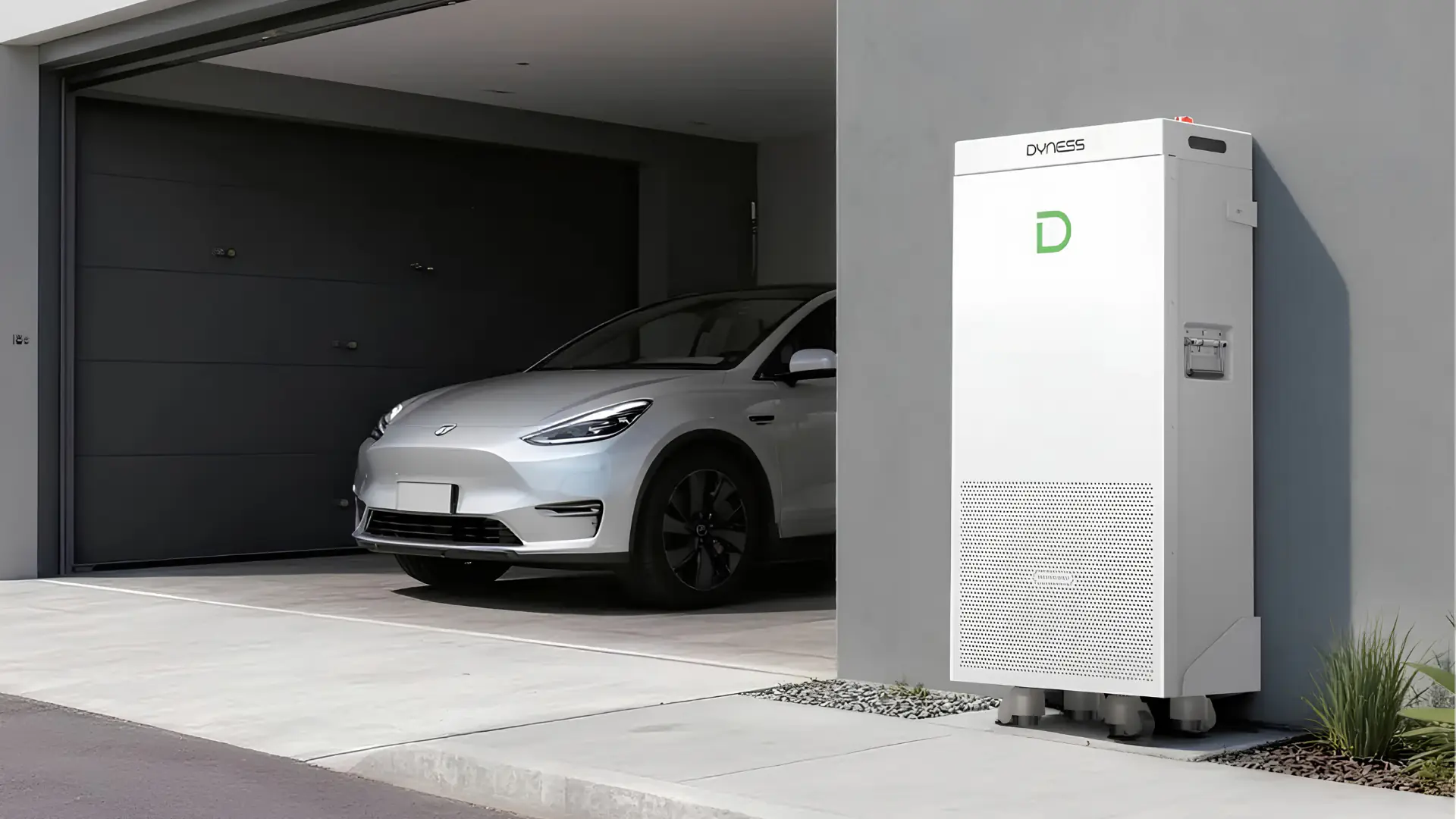
- Physical battery: a cabinet in the garage. It charges from the 14:00 sun. It runs the air-con and the hob at 21:00. The kWh does not leave the house.
- Virtual battery: a balance at the supplier. Your surplus is valued at a contracted price (today, often €0.06–0.07/kWh on “solar” tariffs) and that balance knocks kWh you later buy, at the full rate, off the bill.
The virtual product does not “keep Tuesday’s energy for Thursday”. It keeps a voucher. The voucher is priced when the kWh is cheap. You redeem it when the kWh is dear. The spread stays with whoever sold you the voucher.
The other product that sneaks into the same sentence — sharing kWh between two homes less than 5 km apart — is not a battery. It is collective self-consumption. We split them in 5 km versus virtual battery.
August 2026, with 8 kWh at noon
| What you do with 8 kWh at 15:00 | What you have at 21:00 |
|---|---|
| Export to the grid on PVPC (this month’s surplus ~€0) | €0 compensation. Buy 8 kWh at ~€0.31 → −€2.48 |
| “Store” them in a virtual battery at €0.07/kWh | €0.56 balance. Buy 8 kWh at €0.31. The voucher covers ~1.8 kWh. About €1.92 still missing |
| Put them in a physical battery (~10% round-trip loss) | ~7.2 kWh at home at 21:00. You stop buying those 7.2 at €0.31 → ~€2.23 of bill avoided |
The virtual product paid you midday at the midday price. The physical one paid you the night at the night price. In an August like this, that is not a nuance: it is €1.50–2 per 8 kWh, every hot day.
A hundred days like that are not a whole year — winter is another film — but they are not a lab either. They are July and August on the east coast, every year.
The “we store it for you” trap
- A virtual kWh is not a kWh. It is a euro. If they cut what they pay for surplus, your store shrinks without an electron moving.
- Expiry and balance caps. Many products clear at 12 months or cap the balance if you do not consume. August sun will not wait for February.
- Switching supplier. The voucher usually stays with that company. The garage battery stays with the house.
- No backup. A grid cut leaves the virtual product in the dark. A physical hybrid, properly designed, does not.
None of those clauses is illegal. It is a financial product dressed as a warehouse. Legal, and expensive in a month like this.
When the virtual product can still make sense
It would be dishonest to say “never”:
- You already use almost everything in daylight and surplus is residual: the product does not matter, there is nothing to store.
- You cannot (or will not) put hardware in: a flat, a rental, an impossible board.
- Your night is genuinely cheap (odd time-of-use, little consumption). Then August’s spread is not your case.
For everyone else — a house with evening air-con, a hob, a tank or a car — a virtual battery in August 2026 is selling cheap and buying dear with a pretty name.
Physics is not a miracle either
A battery has a cost, a cycle, heat and a hole in the wall. It does not “pay” because August’s headline scares you. It pays if your curve, not Twitter’s, exports at noon and buys from 20:00 most of the year. We look at that with your bill, not a generic table. The longer frame is in why 2026 is about storage.
→ Request your no-obligation study · WhatsApp 692 22 97 13 · batteries · calculator
Surplus prices €0.06–0.07/kWh: solar supplier tariffs published in August 2026 (Kelisto and comparators). Night PVPC ~€0.31/kWh: average 21:00 hour in August 2026. 10% round-trip loss: order of magnitude, not your battery’s datasheet. Illustrative example, not an offer.