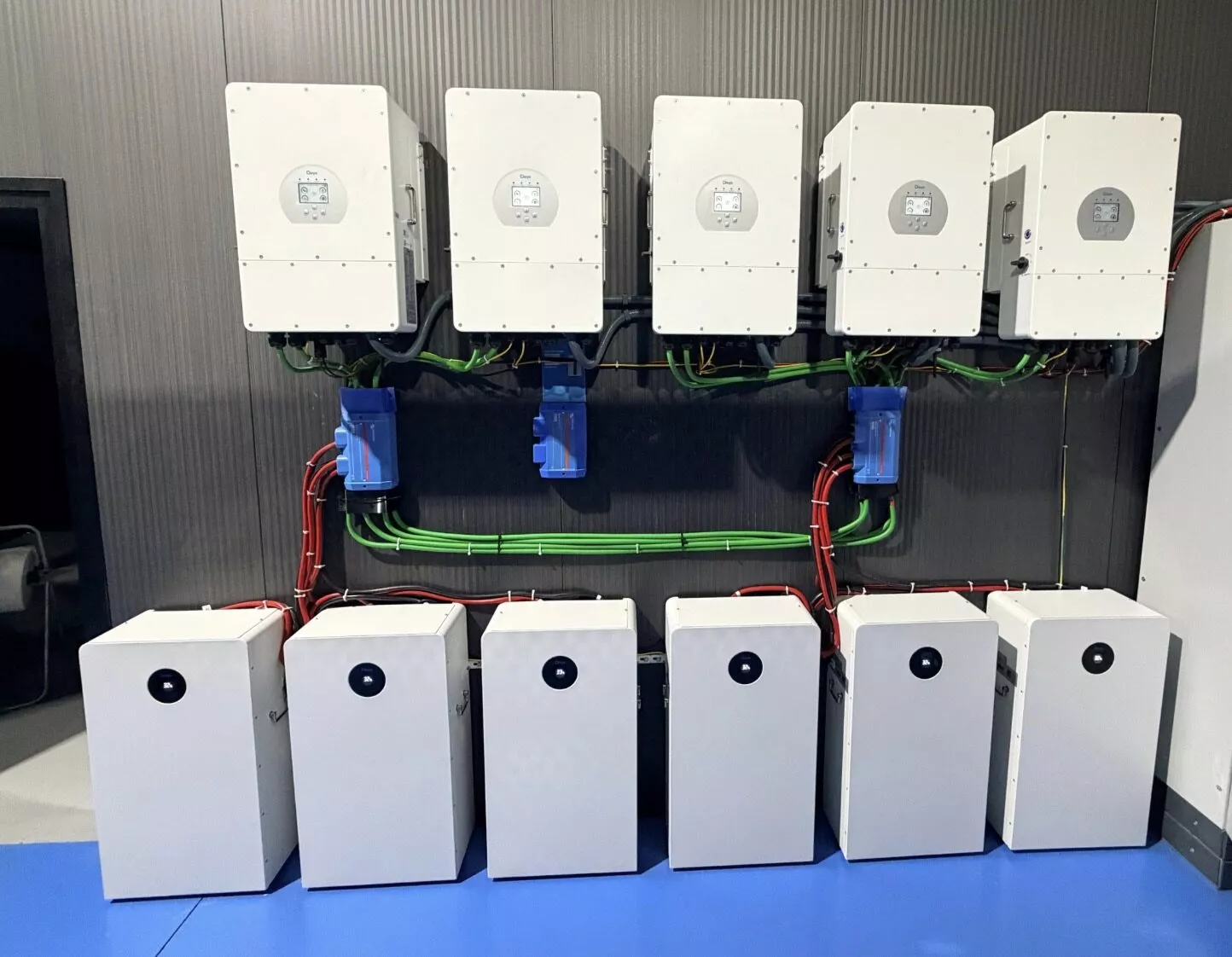
Yes, you can install PV on your warehouse roof with no money down and own the system from day one. You finance the purchase: zero deposit, repayments over five or six years, and a system that saves more than the instalment costs. Banks finance this easily because the return is one of the most predictable there is. And once you finish paying, you have more than twenty years of almost-free energy ahead. That is the whole article in one paragraph. Now the numbers — pretty sentences do not pay bills.
How much does an industrial PV system cost?
A typical 100 kWp roof installation costs around €75,000 turnkey. With good sun and daytime consumption, it produces about 136,000 kWh a year for your own site.
If you pay €0.16 per kWh from the grid today, the roof saves you around €21,000 in the first year. The system pays for itself in four or five years and lasts thirty. That is the business — and it is yours or someone else's depending on how you contract it.
How do you install with no upfront investment while staying the owner?
Through bank finance or leasing. The scheme is simple:
- Deposit: €0.
- Term: five to seven years, not fifteen.
- Ownership: yours from signature — with its warranty, grants and tax depreciation.
- Collateral: the system itself and the savings it generates.
The last line is the key. A bank finances this easily because the asset produces the money that repays the loan. You are not borrowing against your business. You are borrowing against a roof that makes electricity every day.
Will the instalment choke my cash flow?
Let's do the maths on the case above. A €75,000 loan over six years at around 6% works out at about €14,900 a year in repayments.
The system saves about €21,000 that same year.
That leaves about €6,000 in your favour from year one, while you are still paying the bank. Cash flow does not suffer; it improves. And from year six or seven, with the loan cleared, the €21,000 a year (rising as power prices rise) goes straight to your P&L for more than two decades.
The instalment does not come from your pocket. It comes from the electricity bill you stop paying.
What does it cost extra compared with paying cash?
Interest. In the example, about €14,500 in total over six years. That is the real price of not tying up capital.
Now compare it with the other "no money down" route they offer for the same thing — a power-purchase contract on your own roof for fifteen years:
| How you get the panels | Extra cost vs paying cash | When is it yours? |
|---|---|---|
| Cash purchase | €0 | Day 1 |
| Six-year finance | ≈ €14,500 | Day 1 |
| 15-year contract with final buy-out | ≈ €138,000 | Year 15, if they sell it to you |
| 15-year contract renewed | ≈ €388,000 | Never |
Four rows, whole decision inside. Not putting money down costs €14,500 through one door and between €138,000 and €388,000 through the other. And only one of those two makes you the owner. For the year-by-year breakdown of the last two rows, see our analysis of who keeps the value of your roof.
What tax advantages does buying the system bring?
Three — and all three go to whoever owns the asset. You, if you buy; someone else, if you do not.
- Accelerated depreciation. Royal Decree-law 7/2026 allows corporate tax depreciation of renewable self-consumption systems commissioned in 2026. You can deduct the investment much sooner than you depreciate it in the accounts, cutting your tax bill in the early years.
- Grants and subsidies. Regional business self-consumption calls are paid to the installation owner. Same for energy-saving certificates on measures that generate them, such as batteries or lighting.
- An asset on the balance sheet. The system is company property — depreciable, insurable, and it adds value to the building when you sell it, instead of loading a long contract that shows up in any due diligence.
When is this NOT your case?
Let's be clear — this calculation has to hold even if someone selling the opposite reads it:
- If you do not own the building and your lease is short or uncertain, investing in that roof is debatable.
- If your consumption is mostly at night or very low, the numbers tighten and must be modelled on your real curve, not a typical client.
- If you truly have no access to credit, the conversation is different — and then you should compare alternatives with a fine-tooth comb and the contract in front of you.
For everyone else — most SMEs with their own warehouse, a sound roof and daytime shifts — financed purchase is the cheapest way to get panels without tying up capital. By a mile.
How we do it at A Todo Sol
We start where you should start: with your numbers, not ours.
- Free energy audit of your site. Bills, consumption curve, contracted power, reactive charges and roof condition. We tell you how much you would save with your real profile and how many years to payback.
- We structure the finance. Zero deposit, short term, instalment covered by savings from year one. You sign as the owner.
- Turnkey install and lifetime monitoring. Design, legalisation, grants, and our nightly string monitoring included at no extra cost while the inverter is online. We protect the return we promised.
→ Request your free energy audit · WhatsApp 692 22 97 13 · solar for businesses
Finance figures are illustrative and depend on each company's interest rate and term; savings depend on real consumption. This article is not tax or legal advice. Before signing finance or an energy contract, have your adviser review it.