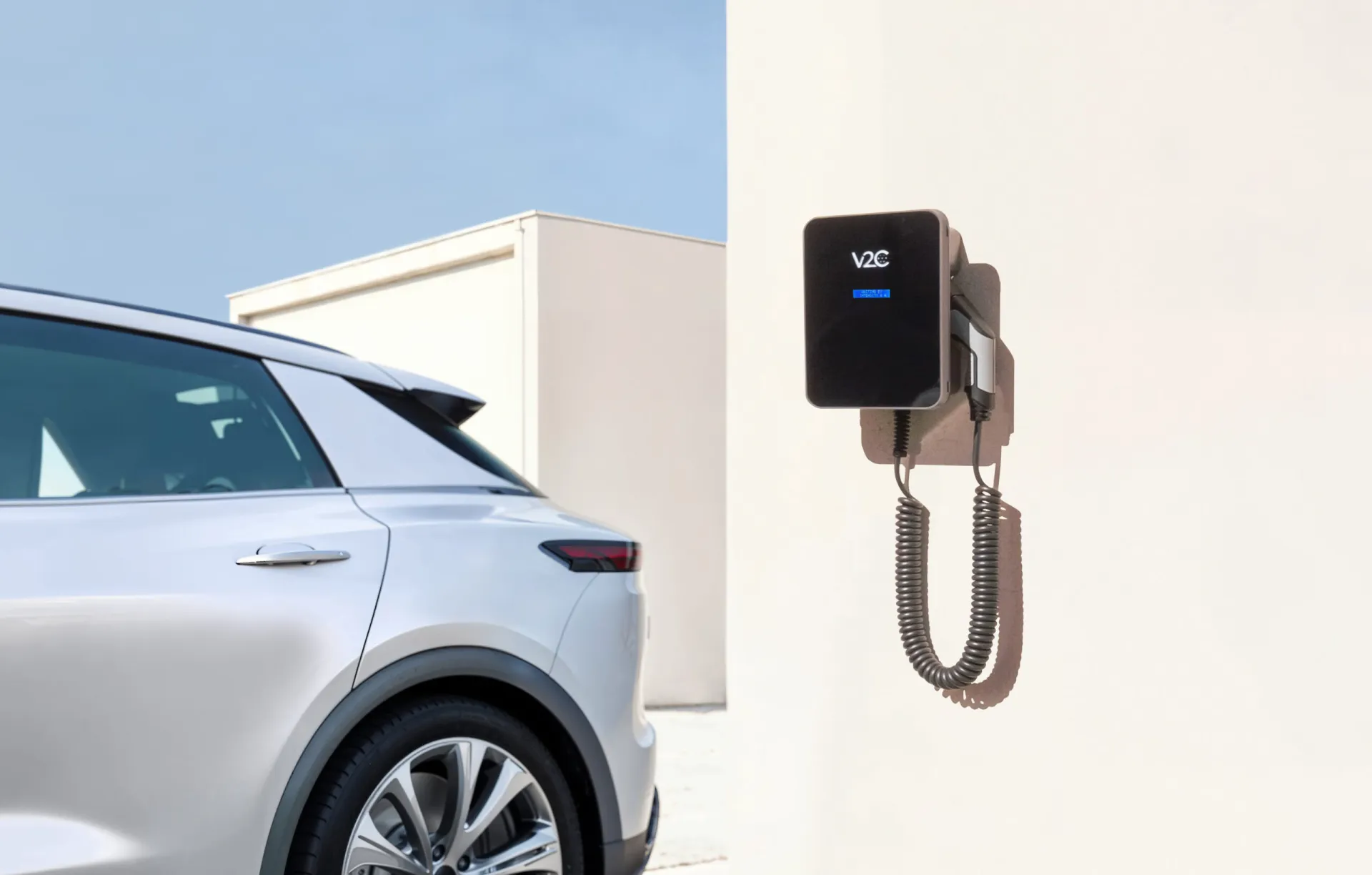
We have stopped installing V2C Trydan chargers on new builds. Period. This is not a “commercial nuance”, nor a headline for clicks: it is the decision of an installer tired of a product with repeated field failures and, above all, of a brand and SAT ecosystem that would rather destroy the installer’s face in front of the end customer than own a design defect.
We write it without anaesthetic. Anyone buying a charge point deserves to know what sits behind the marketing of “smart charging” and “all integrated”. Anyone who already has a Trydan fitted by A Todo Sol deserves another equally hard certainty: we are not abandoning you. And anyone who manufactures or distributes in Spain should read this to the end: treating your own channel and end customers like this is not a “misunderstanding”. It is a way of being.
We cut Trydan. It is not debatable
Trydan looked good in the catalogue: domestic charger, optional protections inside, app, dynamic load. On paper, it fitted. In the field, it cost us time, reputation and customers who left because a brand technician sowed false doubts in their living room.
We are not talking about an isolated fault. We are talking about a pattern:
- failures that appear around the one-year mark,
- integrated protections that trip with no short-circuit to explain them,
- connectors and boards that end up carbonised,
- dynamic charging that demands an IT profile,
- a clumsy app for sharing users,
- absurd dependence on home Wi‑Fi,
- and on-site technicians who throw the installer under the bus as a defence method.
When that repeats, the decision stops being “consider alternatives”. We stop installing Trydan on new builds.
Integrated “protections”: the claim that becomes a trap
Trydan sells hard on carrying protections inside the charger. It sounds convenient. In practice that “convenience” has become one of the biggest sources of charge-point incidents we have seen.
We have had units whose internal protections trip repeatedly — sometimes every one or two charges — with no supply defect to justify it. We have replaced protections (different brands) with labour on our account… and the problem returned: trips, heat, and in the worst cases burning again.
In several cases the real origin was not “the electrician”. It was the unit: defective board connectors/soldering, heat at connection points, protections that do not survive a real duty cycle. We have seen it with our eyes and with photos in warranty interventions.
And still, the story that sometimes reaches the customer from SAT is the opposite: blame the installation. That is not a communication error. It is a cheap strategy to avoid paying the real cost of the product.
V2C’s own documentation admits serious limits of the integrated protections and incompatibilities on certain network types. When marketing promises simplicity and the manual fills with exceptions, the customer pays in technical visits and the installer pays with reputation.
Connectors that burn the board: a failure mode that can no longer be denied
One of the ugliest scenarios we have documented: the unit fails, it is opened, and what appears is not a cable “badly tightened by the installer”, but a press-fit connector / terminal on the power board — carbonised phase on the PCB — degraded until it burns. On older Trydan boards that connector does not hold 22–32 A continuous. After ~1 year: heating → carbonisation → failure → trips / collateral damage to protections.
The technical damage is serious. The reputational damage is worse. While we bring evidence of a component failure, the SAT script in front of the customer is another: “the installation was wrong” and “that is why protections and connectors burn”.
That script is unacceptable. If the unit has a defect, say so. If a board or charger must be swapped under warranty, swap it. What you never do is use the installer as a fuse in front of the homeowner.
And it is not our invention: the same failure mode is documented in public forums (Forocoches, Telegram V2C Trydan, Club Tesla) with photos identical to ours. Anyone who says they “do not know the problem” or that it is “the installer’s fault” is lying or looking the other way.
Four cases. The same script. Total shamelessness
This is not an abstract fight with “the manufacturer”. It is what we have lived, in writing and on site, with V2C’s official channel in Spain (Saltoki, exclusive distributor) and its home SAT. Four episodes. The same method: the unit fails, the technician arrives, and blame is shifted onto the installer in front of the end customer.
Case 1 — Restaurant in Beniparrell
SAT questioned a correct installation in front of the customer — including the “6 mm² cable” story on a short run — when that was not the real origin. Saltoki ended up reimbursing. A few days later the customer expanded PV with another company. That is on the order of ~€12,000 of lost revenue for A Todo Sol. Not theory: the direct cost of sending a SAT to sow false doubts in front of the customer. They took our face… and the next job.
Case 2 — Torrevieja
Burned protections were blamed on an “installation fault”. That Trydan failure mode is known in the field and in forums. We ourselves replaced protections (Chint → Toscano) with labour on our account… and they failed again. Not an “installer detail”: a weak point of the unit. Still, the story to the customer was the usual: the installation. A lie by omission at minimum.
Case 3 — Industrial customer (Valencia)
SAT ticket. The report admits a hot feed and protection trips, and concludes a warranty swap of the protection block. Still, in front of the customer they insist the feed was 6 mm². On that install the charge-point power cable was 10 mm² 1000 V, correctly fitted. Telling the customer the installer put in less is not a “misunderstanding”: it is false information. And it happens in front of an industrial customer with a large quote on the table with us.
We warned in writing before that visit: the technician must not attribute the fault to the installation again. Despite the warning, the script repeated. That is no longer clumsiness: it is deliberate contempt for the channel.
Case 4 — Another Trydan at a home: the burned terminal… and the attempt to void the warranty
Unit without factory protections; protections and PE fitted by A Todo Sol on the intended rail. What burned is not the feed, nor the “tail”, nor the PE terminal: it is again the board connector, the same failure mode as in forums and our other cases.
The commercial response, after apologies for the 6 mm² cable of the previous case, was a textbook of shamelessness: admit replacement “as an exception”… and at the same time claim that, because the protection block was added later, «the unit warranty would already be automatically void».
That does not survive V2C’s own catalogue. The manufacturer publishes that Trydan “includes the option to add electrical protections inside the charger”, the manual contemplates with or without protections, and the FAQ allows protections inside or outside. Inventing after the incident that using the factory DIN rail “voids the warranty” is not support: it is narrative fraud to avoid owning the product.
And on top, in conversation with the channel’s commercial lead, after apologising “if it had happened a third time”, the twist: «perhaps we should review when the third time is the same error again». Translation: on the third time, suspicion returns to the installer. As if the pattern were our work and not the terminal on their board. That insults the intelligence of the people who buy from you.
Four times. The same script. SAT shields itself by blaming the installer. The channel asks us to accept “confusion” or a “customer misunderstanding”. No. It is not confusion. It is a method.
A Spanish company so close… destroying the face of its own people
V2C is not an opaque Chinese manufacturer twelve time zones away. It is a Spanish brand. Its exclusive distributor operates here, speaks our language, invoices Spanish installers and sends SAT to Spanish homes. Precisely for that reason it is unforgivable.
Because the installer is not some random third party: they are the channel’s customer. They buy the Trydan at ~€580 channel price, fit it, answer on Saturday when the car will not charge, put their face in front of the homeowner. In our case, with serious purchase volume from that distributor over years.
What does that ecosystem do when the product fails? Instead of owning the design defect (press-fit terminal / board / protections that do not hold), it destroys trust between end customer and installer. Lies or technical negligence about cable cross-sections. Hints at tampering. Tries to void warranties with invented readings of the manufacturer’s own manual. And when the installer documents the pattern — photos, forums, four own cases — it still sows doubt that “on the third time we should review”… the person who fits it.
That is not after-sales. It is using the channel as a human fuse to cover a product sold as “all integrated” that behaves like a recurring problem. And it is the fastest way for a Spanish brand to burn itself.
Dynamic charging: an (almost) IT headache
Dynamic charging — adjusting car current so you do not trip the main breaker / exceed contracted power, or to use solar surplus — is, in theory, the jewel. In practice, for many customers it is a configuration hell.
It is not “install and done”. You need meter choice, scheme, clamps, IP, protocols, firmware, app… V2C’s own support site publishes a long list of communication error codes. When the manufacturer needs an encyclopaedia of errors just so the car can charge “dynamically”, the message is clear: the customer ends up having to be almost an IT person to touch parameters they should never touch.
You change the Wi‑Fi password… and dynamic charging dies
In many installs dynamic charging depends on the charger and inverter (or Wi‑Fi meter) talking on the home network. When the customer changes router, Wi‑Fi key or technology (Starlink, mesh, guest VLAN…), too often the charger loses dynamic charging until someone re-pairs, reconfigures IPs or “does magic” in the app.
A charge point should not go lame because someone changed the home Wi‑Fi password. That is not resilience: it is fragility dressed as connectivity.
The app and sharing users: a horrible experience
Sharing the charger with a partner, children or staff should be trivial. With V2C Cloud it is a clumsy process: accounts, invitations, codes, registration requirements… Customers who only want “the car to charge” get tangled in a permission flow designed by and for people who live inside an app, not a normal family.
The current clamp: not bidirectional (and boards are not toys)
The clamp supplied in many kits is not bidirectional. With PV that is not a minor detail: it often forces two clamps (or more convoluted schemes) to measure consumption and export / surplus properly.
It gets worse in real domestic boards: tight, full, little mechanical margin. Fitting two clamps where barely one fits is not “elegant professional install”: it is fighting the product in a space marketing never shows in catalogue photos.
Failures arrive late (and that hurts more)
Many faults do not appear on commissioning day. They appear around the year mark, when the customer already trusts the unit, when warranty becomes a fight zone, when nobody wants to hear the charger must be opened again.
What this means if you already have a Trydan with us
We stay with you. Stopping Trydan on new builds does not mean abandoning anyone who already bought through A Todo Sol. We will keep:
- Managing and fighting warranties on sold units.
- Handling dynamic charging, app, protection and communication incidents.
- Demanding honest technical treatment from the manufacturer and its support network: if the fault is the unit, say so; if it must be replaced, replace it — full unit when required, not patches with a story against the installer.
- Preventing, as far as possible, a SAT from entering your home alone to rewrite the history.
If you have a problem with a charger we installed, contact us. We prefer to fight the warranty ourselves rather than leave you alone between a defensive SAT and an error-code manual. We also explain it here: how brand SAT can break a brand.
What we offer from now on
We still install EV charge points, with harder brand and architecture criteria (protections, metering, independence from home Wi‑Fi when possible, UX that does not require an IT person… and a SAT that does not treat the installer like a criminal).
We prefer to say “we no longer install this unit” than keep selling something we know will come back as visits, rows and angry customers.
Conclusion
V2C Trydan has cost us time, reputation and patience. Protections that fail, boards that burn at connectors, fragile dynamic charging, a user-sharing app, non-bidirectional clamps in impossible boards… and above all a brand and SAT ecosystem that, in four documented cases, preferred to throw the installer — their own channel customer — and the end customer under the bus rather than own the product.
Coming from a Spanish company so close, that is not a communication failure. It is a way of being. And ways of being get paid: with a channel that stops buying and customers who stop recommending.
We cut Trydan on new builds. We do not cut our customers. If you have a Trydan fitted by A Todo Sol and it is giving you grief, write to us: we are still here to fight what must be fought.