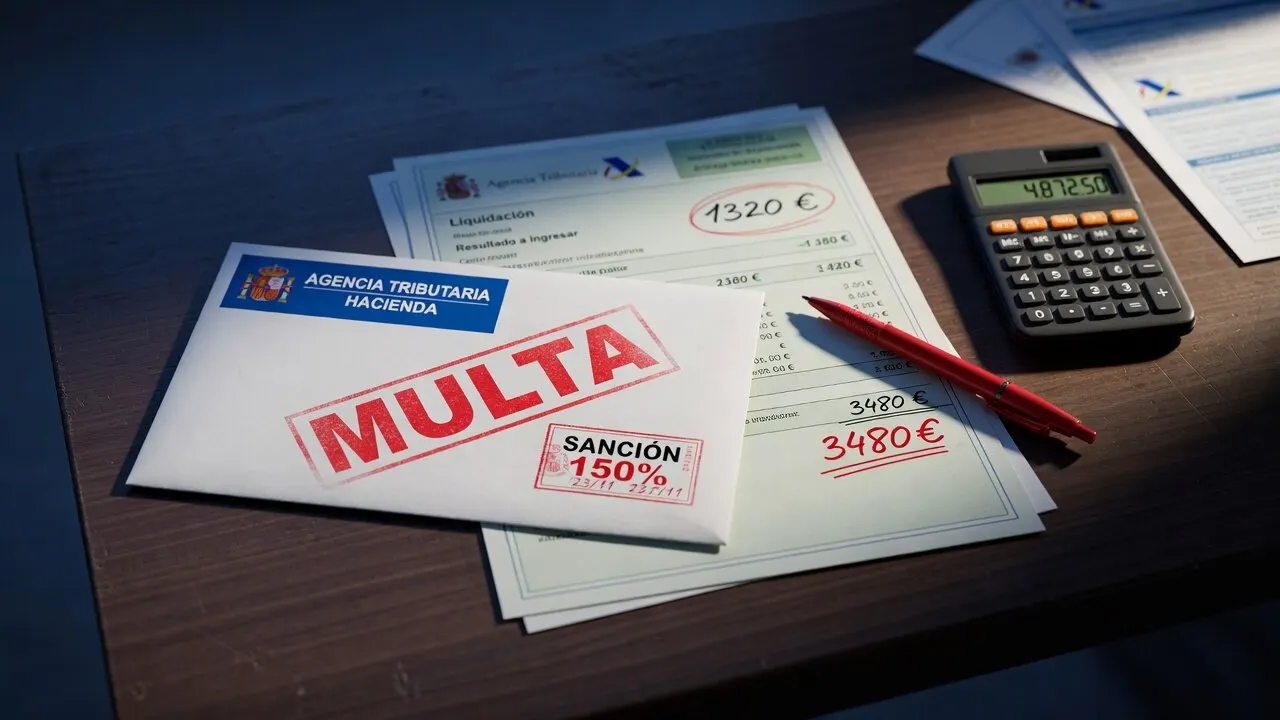
Every week we see the same pattern: a homeowner compares solar quotes and one is clearly cheaper. The “miracle” is not the hardware or the labour. It is 10% VAT on a rooftop PV system for an existing home. Competitors keep selling it despite complaints to the Spanish Tax Agency (AEAT). And many people do not understand the risk: that gap is not a gift from the tax office; it is a tax bet.
This article explains, with the rules in hand, when 10% is legal, when it is a commercial trap, and why the final customer can end up paying if the deal is regularised. It is not personalised tax advice — it is the clear reading every serious quote should allow.
1. The general rule: residential self-consumption is 21% VAT
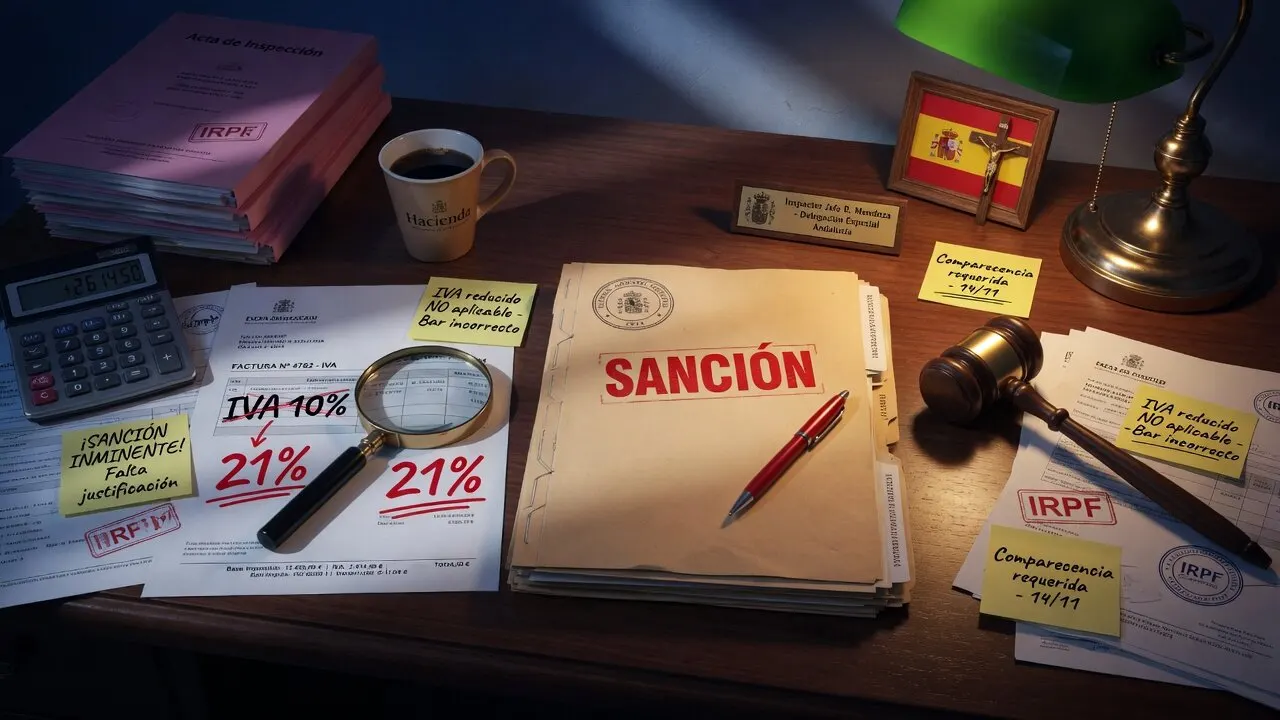
The Spanish Tax Agency is blunt on its website: as a general rule, the rate for works on dwellings is the standard rate (21%). The 10% rate is not “the solar VAT”. It is an exceptional reduced rate for certain renovation/repair or construction/rehabilitation cases under Article 91 of Law 37/1992 on VAT.
A typical home PV install — panels, inverter, structure, cabling, paperwork — is, in practice, a supply of goods with installation where materials dominate the cost. That is why, in the vast majority of real residential projects, 21% applies.
If someone sells 10% as if it were the normal rate for home solar, they either do not know the rule — or they are competing with a tax discount that does not apply.
2. When 10% CAN apply (and why standalone panels rarely qualify)
There are two main doors to the reduced rate. Both are narrow. Neither says “photovoltaics = 10%”.
A) Renovation and repair works on a dwelling (Art. 91.Uno.2.10º)
According to the AEAT, renovation and repair works on buildings mainly used as dwellings go to 10% only if all three conditions are met:
- The customer is a natural person using the home for private use. Rental or any business use (even partial) blocks the reduced rate.
- Construction or rehabilitation finished at least two years before the works start.
- The contractor does not supply materials, or their cost does not exceed 40% of the taxable base.
The AEAT’s own example: a €10,000 job with €3,000 of materials may go to 10%. The same job with €5,000 of materials → standard 21%.
That is the core problem for solar: in a normal residential kit, panels + inverter + structure + protection gear routinely exceed 40% of the total price — often 50–70%. If materials exceed 40%, the whole operation is 21%, not only the materials line.
Splitting “labour at 10% / materials at 21%” on a poorly structured single works contract does not save the rate. What matters is the cost of materials supplied by the contractor against the full taxable base.
B) Construction or rehabilitation of residential buildings
10% can also apply to construction or rehabilitation works on buildings mainly used as dwellings (contracts with the developer — not every cosmetic remodel). Rehabilitation also needs hard thresholds:
- More than 50% of project cost must be structural consolidation, façades, roofs or analogous/connected rehabilitation works.
- Total works must exceed 25% of the acquisition price or market value of the building (land excluded).
The rules recognise energy rehabilitation (including renewable equipment) as a connected work inside that rehabilitation framework. That does not turn a standalone panel install, without a real rehabilitation project, into “10% because of an energy certificate”.
C) Self-build / first delivery of a home
When PV is built into a new home (self-promoter or first delivery in the legal sense), the tax fit can differ. That is a real case — and not the family already living in their house who only want panels on the roof.

3. The sector’s usual tricks (how 10% is “sold”)
These are the practices we see most often. Not all are organised fraud — sometimes it is ignorance. The effect on the customer is the same.
1) Presenting 10% as “the solar VAT”
Ads, comparison sites and WhatsApp pitches talk about 10% as if it were the official self-consumption rate. It is not. It is a conditional reduced rate. Selling it as the default is at best misleading.
2) Deliberately ignoring the 40% materials cap
The whole install is invoiced at 10% even though panels, inverter and structure exceed 40% of the base. It is the most common shortcut: it undercuts a compliant competitor by roughly 9–11% and is classic unfair competition.
3) Mixing VAT with EPC letters, income-tax deductions or grants
You hear: “because the energy certificate improves a letter, VAT is 10%.” Those are different regimes. Energy performance certificates and personal income-tax deductions for energy renovation have their own rules. They do not replace the three Article 91 VAT tests. Using the certificate as a free pass to 10% is either confusion — or a trap.
The same applies to Next Generation grants, regional deductions or vehicle schemes: a subsidy or a tax credit does not by itself change the VAT rate on the installation invoice.
4) Fragmenting or dressing up the taxable base
Some quotes artificially split “customer-supplied materials”, “supply” and “labour”, or inflate labour and deflate materials on paper to “fit” under 40%. If in reality the contractor supplies the panels and inverter, the tax office looks at the economic reality, not the sales deck.
5) Applying 10% to rentals, business use or non-private dwellings
The renovation/repair reduced rate requires private use by a natural person. Let properties, professional offices or mixed business use break the case — yet quotes still offer 10% “because it’s solar”.
6) The magic invoice line: “materials < 40%”
Writing on the invoice that materials do not exceed 40% does not make a false statement true. It helps only when it is true and documented. A copy-pasted phrase is a red flag for inspection, not a shield.
4. Unfair competition: “everyone does it” is not an argument
In real chats customers say: “Company X and Y put 10%”, “so does Z”, “so is everyone wrong?”.
Uncomfortable but honest answer: volume of non-compliance does not create legality. It turns the market into a minefield where the installer who charges 21% looks “expensive” and the one who wrongly applies 10% wins the bid. That is unfair competition against firms that:
- calculate real materials cost;
- charge 21% when the law requires it;
- and refuse to pass a hidden tax liability to the customer as a “discount”.
Complaints to the AEAT exist because the sector has distorted prices with the reduced rate for years. Until inspections regularise case by case, the perverse incentive remains: non-compliance wins margin; compliance loses the sale.
5. Risk for the final customer: it is not “only the company’s problem”
This is what almost never appears in the sales visit.
Who is the taxable person… and who ends up paying
Under VAT, the business that carries out the transaction is, in principle, the one that charges and remits the tax (the installer). If it applies a rate lower than due, the AEAT can demand the missing VAT, plus late-payment interest and, where applicable, penalties.
That does not put the private customer in a bubble:
- The company may claim the difference from you (corrective invoice, contract clause, “VAT regularisation”) when the tax office presses or when internal policy changes.
- If the company vanishes, enters insolvency or has no assets, you keep a fragile tax invoice, a price that never reflected the real operation, and often nobody cleanly owns the fix.
- A wrong-rate invoice can complicate income-tax deductions, grant justifications or later reviews: administrations cross-check data; they do not only look at the pretty PDF from sales day.
- Where the customer side is a business or professional, the consequences of an incorrect charge get harder still.
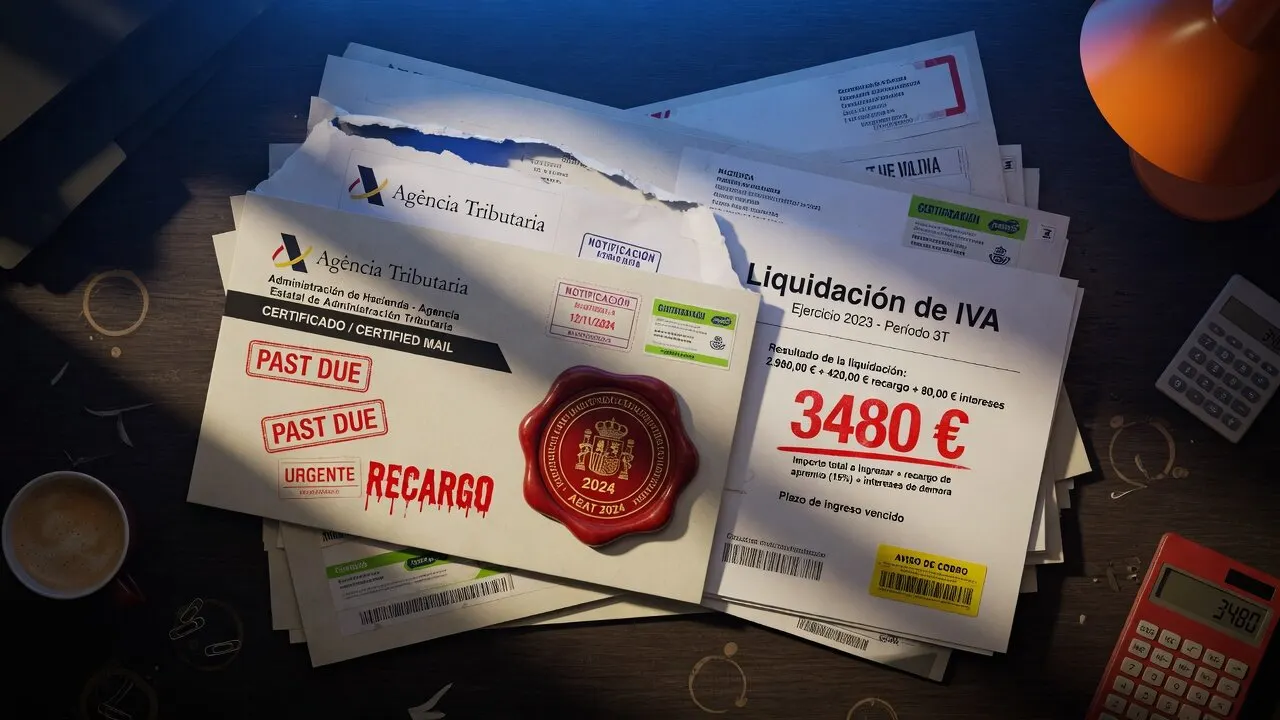
On a typical €12,000 net (taxable base) install, the “bargain” of 10% VAT is €1,320 of under-charged tax. That is only the first step. With late-payment interest and the maximum penalty under Article 191 of the Spanish General Tax Law, the joke can more than double.
The comparison that matters: clean buy (21%) vs risky buy (10%)
Typical install: €12,000 taxable base (before VAT). Maximum deductions on that base:
- State IRPF 60% (energy rehabilitation band, if you qualify): deductible base up to €15,000 cumulative → here 60% × 12,000 = €7,200.
- Valencian regional IRPF 40% (primary home): maximum base €8,800 → 40% × 8,800 = €3,520 (you do not get 40% on the full 12,000: the legal cap cuts at 8,800).
| Item (€12,000 base) | Normal purchase 21% VAT + deductions OK |
Risky purchase 10% VAT + AEAT mess + lose IRPF |
|---|---|---|
| Taxable base | €12,000 | €12,000 |
| VAT on invoice | €2,520 (21%) | €1,200 (wrong 10%) |
| Invoice total day 1 | €14,520 | €13,200 (“€1,320 bargain”) |
| Missing VAT (21−10) | €0 | +€1,320 |
| Late-payment interest (orient. 3–4 years) | €0 | +€180 |
| Max Art. 191 LGT penalty (150%) | €0 | +€1,980 |
| VAT mess subtotal | €0 | +€3,480 |
| State IRPF deduction 60% cumul. base cap €15,000 → here 60%×12,000 |
−€7,200 | €0 (you lose it) |
| Regional IRPF deduction 40% base cap €8,800 → 40%×8,800 |
−€3,520 | €0 (you lose it) |
| Total IRPF deductions | −€10,720 | €0 |
| Orientative final net cost invoice + VAT mess − IRPF |
€3,800 | €16,680 |
| How much worse is 10%? | Clean reference | +€12,880 damage |
One-line read: the 10% VAT “discount” is €1,320 on invoice day. The disaster path (regularisation + max penalty + interest + losing 60% and 40% IRPF) leaves a net cost of €16,680 versus €3,800 if you had billed at 21% and kept the deductions. Gap: €12,880 against you.
For a cosmetic €1,320 saving you can end up €12,880 worse off. With the tax agency, wrongful 10% is not a shortcut: it is a net-cost trap.
Quick breakdown of the risky side (all red if it materialises):
- +€1,320 under-charged VAT
- +€180 late-payment interest (orientative)
- +€1,980 150% penalty on that tax
- +€7,200 of state 60% deduction you do not get (or repay if already claimed)
- +€3,520 of regional 40% deduction (€8,800 base cap) you also lose
The real disaster: losing the 60% state deduction and the 40% regional one
So far we have only counted mis-rated VAT. For most families who install panels, the big money is not the €1,320 rate gap. It is income tax (IRPF).
In Spain you can combine (if you meet the rules and deadlines):
- State deduction for energy-efficiency improvement works — bands of 20%, 40% or, for energy rehabilitation of a residential building that proves the required improvement, 60% (with annual bases and a cumulative cap; the 60% band is the one that matters most in residents’ associations and serious rehabs, and recent rules have extended its life).
- Regional deduction for self-consumption / renewables — in the Valencian Community, on a permanent basis, 40% of the investment on a primary home (20% on a second home), with a maximum base of €8,800 per dwelling and IVACE certification. It is compatible with the state deduction if documented properly.
Those deductions are not invented on a sales spreadsheet. They require, among other things:
- correct, complete, coherent invoices (concept, base, VAT rate, tax ID, bank payment method);
- traceable payments (transfer, card, nominative cheque… not cash);
- energy performance certificates before and after when state rules demand them;
- and, for the Valencian regional part, the IVACE certificate.
The tax office does not gift you 60% or 40% because the roof looks good on Instagram. It recognises the deduction if the deal is clean. An invoice at 10% VAT when 21% was due is a red flag in any income-tax review or limited check.
The table above already shows the damage in red. Below is the same case as a story — because competitor WhatsApp only shows the “bargain” column, never the €16,680 one.
The disaster case, step by step (what nobody says on WhatsApp)
- You sign the cheapest quote because it carries 10% VAT. Versus a serious 21% quote, the gap is those ~€1,320 on a €12,000 base.
- They install and you try the tax return with 10% invoices, EPCs and, in Valencia, IVACE paperwork. For a while, nobody calls.
- Inspection, limited check or data cross-match: AEAT sees a reduced rate on PV where materials clearly dominate. It asks for materials breakdown, contracts, Art. 91 justification.
- VAT regularisation: €1,320 tax + interest + possible 50%–150% penalty. The company re-invoices you, sues you, or disappears.
- Knock-on IRPF effect: if the invoice is not as solid as sold, or the file undermines the operation, the state (40%/60%) and regional (40%) deduction boxes become a problem. They may claw back prior-year deductions with interest, or refuse what you planned to claim.
- Outcome: you paid for the install, lost the VAT “discount”, maybe paid a fine or legal fees, and lost the real economic benefit of the project — the deductions — which was far larger than the 10% theatre.
Why it is better not to gamble with the Spanish Tax Agency
- They do not improvise: the 40% materials test and reduced-rate rules are written on the AEAT site and in the VAT Act. Not “an installer’s opinion”.
- They cross worlds: VAT (the company) and IRPF (your return) are not eternal silos. A weird invoice in one place dirties the story in the other.
- Time is on their side: late-payment interest, check windows, demands that arrive when the 10% salesperson no longer picks up.
- The penalty hurts more than the “saving”: Art. 191 LGT allows fines up to 150% of unpaid tax. On €1,320 that is almost €2,000 of fine on top of the tax.
- You stay in the photo: the company can wind up, rebrand or go insolvent. You remain the homeowner, the invoice holder and the person who files the return.
- Defence is not free: adviser, appeals, sleepless nights. That is also part of the price of “saving” correct VAT.
Gambling with the tax agency for an 11-point rate on the quote is, in practice, betting the entire fiscal return of the install (thousands of euros of IRPF) for a cosmetic discount that may be illegal. The rational question is not “who gives me 10%?”. It is “who leaves me a clean file for the tax return — and for the day AEAT calls?”.
6. What to demand on the quote (practical checklist)
- VAT rate broken out and a clear taxable base. Be wary of opaque “all-in” totals.
- If they apply 10%, get in writing which legal case they rely on (renovation/repair with materials ≤40%, real rehabilitation, new build/self-promotion…).
- If they invoke the 40% test, ask for a breakdown of materials cost supplied by the installer versus total base. No numbers = marketing.
- Do not accept “it’s because of the EPC” or “it’s because of the grant” alone: those are not the same as VAT.
- Compare quotes on equal net base and correct VAT. If one only wins on the rate, you are not comparing installs — you are comparing appetite for tax risk… and the risk of losing the 60% / 40% IRPF deductions.
- Ask for income-tax documentation: valid invoices, bank payment, before/after EPCs and, in the Valencian Community, the IVACE path. Without that, the 10% “saving” can cost you the deductions.
- Keep contract, invoice, certificates and messages. If there is a regularisation, paperwork is your best defence.
7. A Todo Sol’s position
We invoice the VAT that applies. In the vast majority of self-consumption installs on existing homes, that means 21%. Not because we enjoy looking more expensive. Because:
- residential PV materials usually exceed 40% of the base;
- we will not compete with a tax discount the customer may pay later;
- and we would rather lose a sale today than leave a ticking bomb on your invoice.
If your case is one of the exceptions (new build, real rehabilitation meeting the thresholds, or works where materials truly stay under 40%), we analyse and document it. 10% applies when the law allows it — not when the competitor’s spreadsheet needs it.
Conclusion
10% VAT on solar panels exists in the law, but only in concrete, demanding cases. In day-to-day residential self-consumption, the natural rate is 21%. Whoever offers 10% without proving the legal fit is not doing you a favour: they are selling a price built on risk — theirs and, often, yours.
The disaster case is not “paying €1,320 extra one day”. It is chaining VAT regularisation, penalty, interest and the loss or clawback of the 60% state and 40% regional IRPF deductions: thousands of euros that were the real return on the install. With the Spanish Tax Agency, gambling on a cosmetic reduced rate is the most expensive way to try to be clever.
Complaints to the AEAT have not cleaned the market yet. Until then, the homeowner’s best protection is simple: understand the rule, demand a clean invoice for your tax return, ask for the breakdown, and do not sign a “tax bargain” the tax office never signed with you.
Normative frame (orientation only): Spanish Tax Agency site — “What rate applies to works on dwellings?” (renovation/repair and construction/rehabilitation); Art. 91 Law 37/1992 on VAT; consistent Directorate-General for Taxes guidance on self-consumption and the reduced rate. This article is not a substitute for personalised tax advice on your specific case.