
If you are comparing solar quotes and the gap is €600 or €800, your brain will naturally say: “I’ll take the saving.” The problem is you are not buying a sofa. You are buying a system meant to last at least 25–30 years: panels, inverter, batteries, paperwork, grants, monitoring — and someone who still picks up the phone when something fails.
This article is for people who are genuinely undecided: A Todo Sol, or a cheaper installer? No marketing drama. Arithmetic, the 2021–2026 sector crash map, the hidden cost of “cheap”, and what we watch for free — with no maintenance fee.

1. The sum almost nobody does: €800 over 30 years
Suppose the cheapest offer “saves” you €800 versus a company with real history, in-house team and real service.
- €800 ÷ 30 years = €26.67 per year
- €26.67 ÷ 12 months = €2.22 per month
Uncomfortable arithmetic
€800 of “saving” = €2.22 a month for 30 years.
A bad coffee. In exchange for betting three decades of continuity on a company with no safety net.
If your system is for 30 years, the question is not “how much do I save at signing?” It is “who will still be here in 2030, 2035 and 2045?”

2. Boom → bust: the 2021–2026 sector map
Between 2021 and 2023 Spanish self-consumption boomed: high power prices, subsidies, aggressive marketing and dozens of companies scaling like startups. From 2023–2024 the market contracted: less urgency, price wars, thin margins and organisations that had over-hired and over-promised.
The result, documented by the press and consumer groups, is a trail of pre-insolvency filings, mass layoffs, restructurings and creditor insolvencies. That is not sales scare tactics. It is the public record. And the household customer usually sits at the back of the queue when a limited company collapses.
3. Names the sector already knows (and customers suffer)
No need to invent ghosts. Public examples of the pattern:
Social Energy (Senerco Energy Services SL)
A highly visible Seville residential installer. In March 2026, the Seville commercial court opened voluntary insolvency proceedings. OCU and FACUA have documented the damage: half-finished systems, money paid upfront, paperwork in limbo, customers hunting for anyone who answers. More detail in our piece on Social Energy’s collapse and how to choose an installer.
SolarProfit
One of the big names of Spain’s solar boom. When the market cooled, the sector saw pre-insolvency, restructuring and a brutal workforce cut. Thousands of customers and many open jobs left in the classic limbo: who does after-sales? who finishes the work? who handles the admin?
Svea and the “fast-growth big brand” pattern
Brands with heavy lead-gen and aggressive pricing have left a familiar Spanish footprint: rapid expansion → margin pressure → service that does not scale → orphaned customers when the organisation shrinks. Each corporate file is different; the customer pain is the same: “I signed with a big brand… and now nobody is there.”
Logo size is not a 30-year warranty. Real history, an in-house team and service are.
4. The hidden cost of “cheap” (far more than €800)
When the company vanishes or stops answering, you do not only lose the discount. You lose whole layers of the value you thought you bought. Realistic order-of-magnitude costs afterwards:
| Hidden cost | What happens | Order of magnitude |
|---|---|---|
| Another company’s site visit | Diagnosing a foreign install with no drawings or history | €150–400 |
| Repair / parts without after-sales | Inverter, fuses, wiring; no living warranty channel | €300–2,500 |
| Re-legalisation / corrections | Half-finished file, electrical bulletin, utility | €200–1,200 |
| Lost grant or paperwork | Unanswered request; aid evaporates | €1,000–6,000 |
| Lost production (dead string) | Months at half output without noticing | €200–800/year |
| Orphan battery or wallbox | No config, no firmware, no one to call | Incalculable + stress |
| Wrong electricity tariff for 3 years | No advisory; you overpay every month | easily > €800 |
The last row alone kills the “saving” on signing day. A wrong tariff for three years — excess contracted power, poor export compensation, schedules that ignore your solar — usually exceeds those €800. “Cheap” did not save you €2.22/month: it left you alone with the bill.
Lifetime value fact
A poorly chosen tariff over 3 years often costs more than €800.
That is only the bill — before a dead string, a lost grant or an inverter with no after-sales.
5. Three quotes, one roof (10- and 30-year TCO)
Illustrative example (same home, ~6 kWp, same area). Not your exact quote: the logic of total cost of ownership.
| A — “Cheapest” | B — Market mid | C — A Todo Sol (history + service) | |
|---|---|---|---|
| Signing price (illustrative) | €7,200 | €7,600 | €8,000 |
| “Saving” vs C | €800 (€2.22/mo over 30 years) | €400 | — |
| In-house team / after-sales | Subcontractors / unclear | Mixed | In-house + real support |
| String + fault monitoring | Manufacturer app only | Sometimes | Included, no fee |
| Energy advisory | No | Occasional | Ongoing |
| Abandonment risk | High if boom-grown | Medium | Low (history + structure) |
| 10-year TCO (order of magnitude) | Low price + visits + silent faults + bad tariff → often the most expensive | Middle | Slightly higher price + watched production + optimised bill → usually wins |
| 30-year TCO | If the company dies, the €800 “saving” dies on the first serious incident | Depends on real service | Value is who is still there, not the day-one PDF |
Quote A wins on signing day. Quote C wins the life of the system — which is what you thought you were buying.
6. Sales red flags (walk away)
- They want 100% upfront. A solvent company does not need all your money before work starts.
- They promise “two grants” that sound too good. Often only one is compatible. If they tell you after you sign, bad sign.
- They subcontract the whole install. If the crew in your house is not theirs, who answers in year five?
- Their only argument is “look at our 5-star Google rating”. Google reviews can be bought relatively easily. That is not 30-year solvency.
- They cannot explain monitoring beyond “you get an app”. The manufacturer app does not watch silent string failures.
- Only sales faces, no technical face. Ask who legalises, who does after-sales and who answers on a Sunday.
- “Today only” pressure. Fake urgency fuelled the boom that already burst.

7. Google reviews are easy to buy. Trustpilot is harder

Google reviews can be purchased relatively easily: new profiles, bursts of 5-star copy, generic text, little conversation. Not all Google is fake — many reviews are real — but the channel can be inflated. Using it as your only proof is naive.
Trustpilot is harder to paint over and easier to read: public contrast, visible replies, recent trend. Look at the share of 1-star reviews in the last months, not only the historic average.
Practical rule: Trustpilot + history + in-house team + real installs. Google as a complement, not gospel. At A Todo Sol we also measure ourselves on Trustpilot.
8. If your installer has already fallen: useful steps (no panic)
If this story is yours, not everything is lost. Practical order:
- Gather documents: contract, invoices, payment proof, emails, signed quote, grant file number.
- File your claim with the insolvency administrator within the deadline (if a court process is public).
- Contact OCU or FACUA if they are grouping affected customers; collective routes sometimes exist.
- Check your grant or paperwork yourself with the administration (do not assume “they are handling it”).
- Find a stable company to adopt the system for after-sales, monitoring and fixes. We also take on systems we did not install.
It is not a pleasant process. Better not to live it — for a €2.22/month gap on the day you signed.
9. Dead Wi‑Fi = a blind installation (and why we watch it)
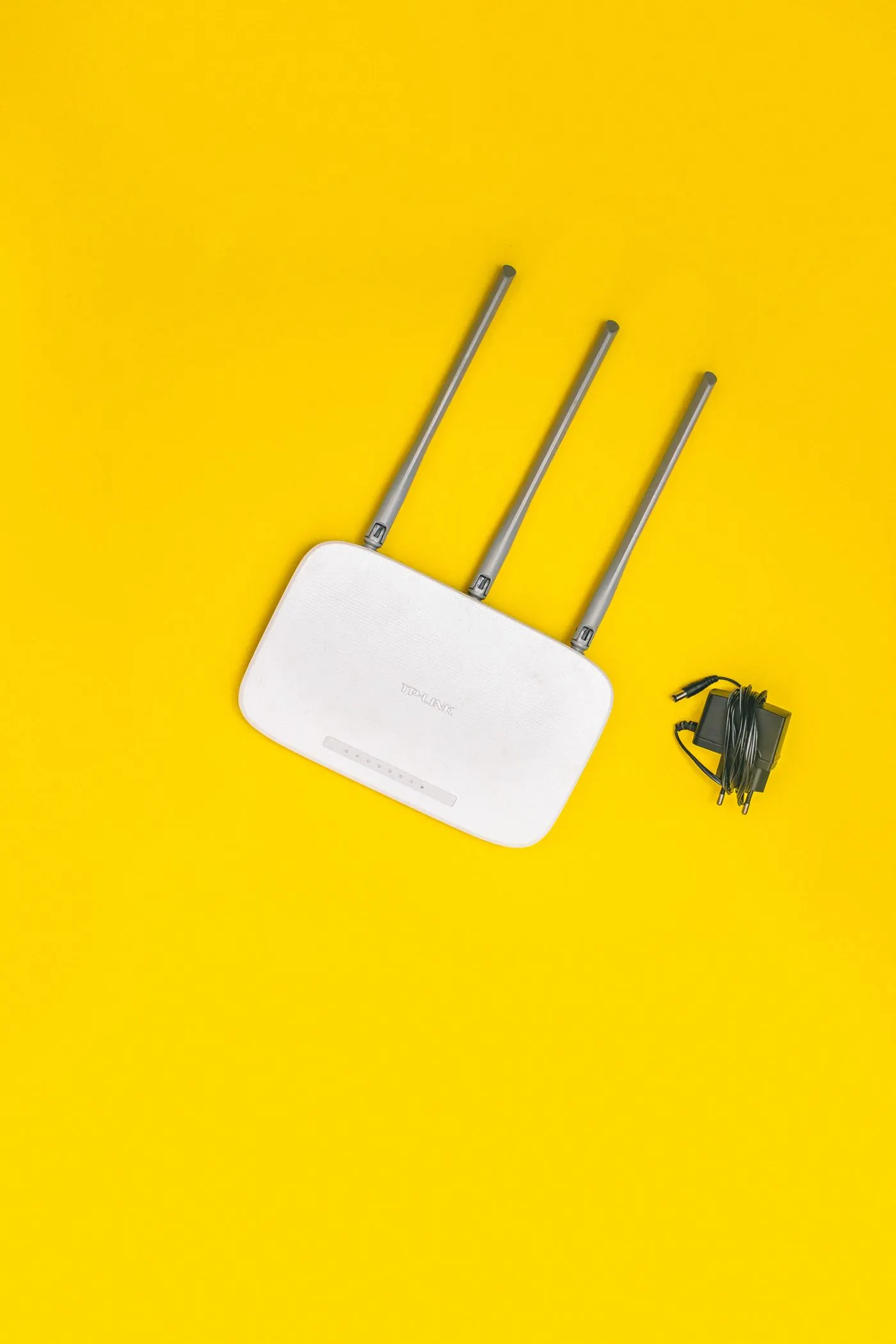
An inverter without connectivity is not an “IT detail”. It is blindness:
- you cannot see a dead string,
- you cannot see collapsed production,
- we cannot alert you to faults or grid loss,
- and the system can fail quietly for weeks.
So we do not stop at “is the app installed?”. We watch that the inverter stays online (home Wi‑Fi / network / manufacturer link). Prolonged disconnect is not a ticket lost in a mailbox: it is a signal to act — network restart, credentials, coverage, or a visit if needed.
The manufacturer app shows production when everything is fine. We watch so the system does not fail in silence when Wi‑Fi or a fuse dies.

10. What A Todo Sol does differently (no maintenance fee)
History is not enough. You need to know what you get after signing. Technical detail on our technology and monitoring page.
PV string monitoring
Every night we compare each panel string’s voltage with commissioning day. If a fuse blows, the system produces less… and the app often stays quiet. We do not. Free for life while the inverter is online.
Wi‑Fi / online connectivity
We detect when the system stops reporting. An offline inverter is a system that may be failing with no witnesses.
Fault alarms and grid-down +24 h
Dropped strings, abnormal behaviour, and an alert if street power has been down for more than 24 hours (with some hybrids customers do not always notice). The manufacturer does not package this. Neither do most competitors.
Zero maintenance fee for this service
It is not a €15/month “premium plan”. It is how we understand a 30-year install.
Energy advisory: real savings are not €2.22
Cheap sales sells kWp. We help the bill drop by far more than a monthly coffee: tariff vs your real curve, proper export compensation, contracted power without fat, habits (EV, heater, heat pump) aligned with solar and batteries. More on our energy advisory approach and the savings calculator.
And one honesty detail that is also “history”: we do not process IBI council-tax rebates, because they cannot be properly delegated and can get expensive if the property has irregularities. We explain it without smoke in why we don’t process IBI rebates.
One-line summary
€2.22/month is the “saving” of signing with anyone. Tens of euros a month (or more) is what you gain — or lose — with a watched system and real advisory.
11. So… A Todo Sol or the cheapest quote?
If your only criterion is this week’s lowest PDF, we will not always be the cheapest. If your criterion is a 30-year system with a face and a phone number:
- history and in-house team,
- reviews you can cross-check (Trustpilot, not only inflatable Google),
- string, Wi‑Fi and fault monitoring with no fee,
- energy advisory so savings are not just a slogan on signing day.
Customers of collapsed installers do not miss “having paid €800 less”. They miss having someone.


No-strings CTA
Send us the cheapest quote you have been given.
We will tell you, point by point, what is missing: monitoring, after-sales, legalisation, fine print, abandonment risk. No pressure, no obligation. We would rather lose a sale than watch you sign blind for €2.22 a month.
Context sources: OCU and FACUA coverage of Social Energy (2026 insolvency); sector press on the 2023–2026 self-consumption contraction and large-installer restructurings. TCO and hidden-cost figures are order-of-magnitude guides for clear decisions, not a bill for one specific case.