
The basics you need to know
A photovoltaic system is the set of components that turn sunlight into electricity you can use at home or in your business. The two main components are:
- Solar panels: capture the sun's energy and convert it into electricity
- Inverter: transforms the electricity produced by the panels into a format your appliances can use
Imagine the solar panels are like a water tap and the inverter is like a pipe. If the tap pours out more water than the pipe can carry, some of the water is wasted. The same happens with electricity in a solar system.
A practical example with the equipment we use
The kit we are looking at:
FT-EM600-PH panel (the energy producer)
- Power: 600 W (the total amount of energy it can generate)
- Voltage (Vmp): 42.52 V (similar to electrical "pressure")
- Current (Imp): 13.64 A (similar to the electrical "flow rate")
SUN2000-2-6KTL-L1 inverter (the energy transformer)
- Can only handle a maximum input current of 12.5 A
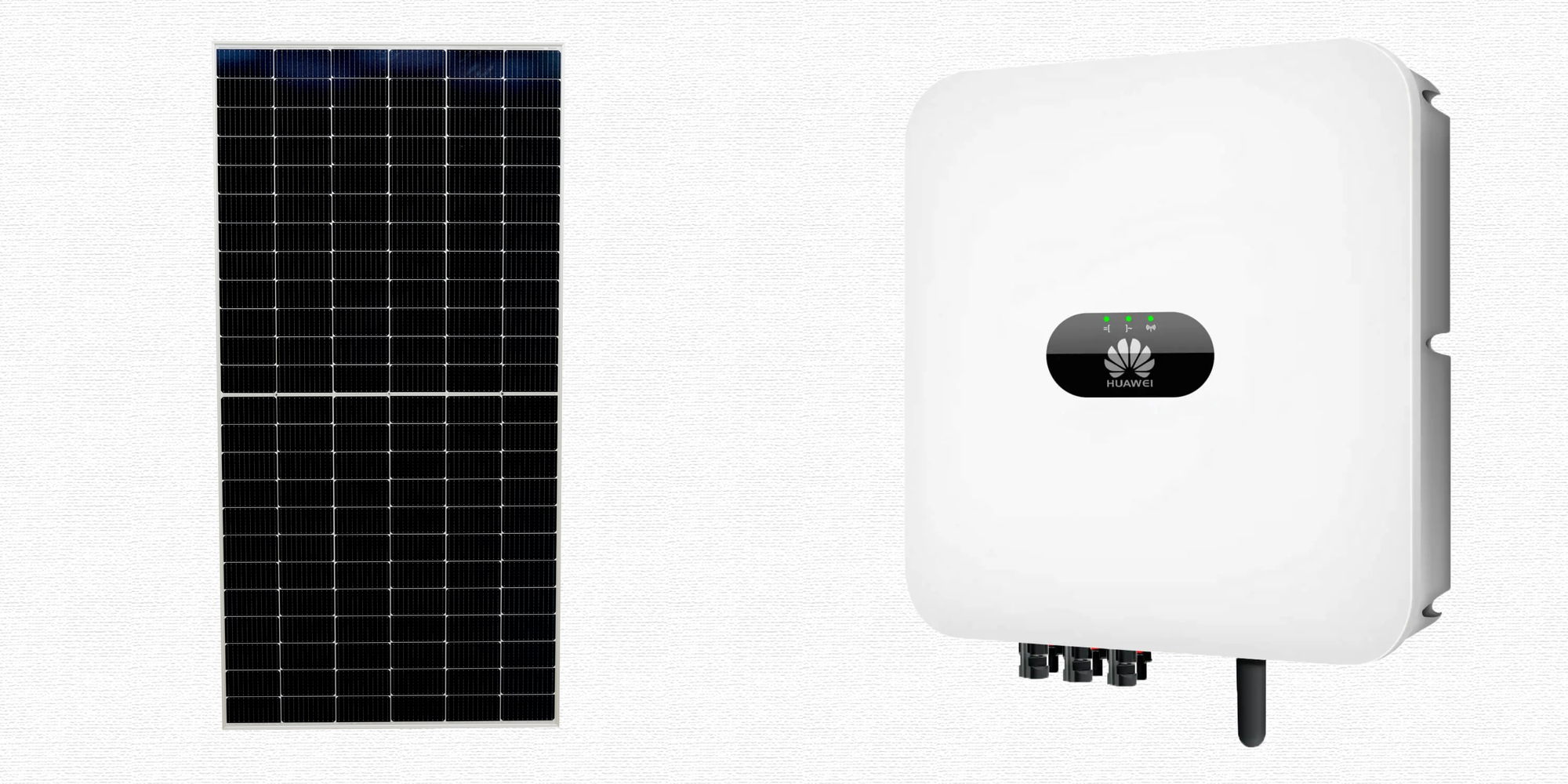
The problem explained
The solar panel tries to push 13.64 A of current, but the inverter can only accept 12.5 A. It is as if you had:
- A garden hose (panel) that can deliver 13.64 litres per minute
- Connected to a funnel (inverter) that can only process 12.5 litres per minute
The result is that some of the water (electricity, in this case) is wasted.
How much energy are we really losing?
We can calculate the real usable power with a simple multiplication:
Real power = Voltage × Maximum allowed current
Real power = 42.52 V × 12.5 A = 531.5 W
This means that of the 600 W your panel can produce, you will only be tapping around 531 W. You are losing nearly 70 W of capacity!
What does this mean for my installation?
This limitation has practical consequences:
- Lower energy production: you will generate roughly 11.5% less electricity than you could.
- Slower payback: it will take longer to recover the money invested in the panel.
- Wasted capacity: you are paying for a 600 W panel but only getting 531 W out of it.
The impact on your wallet: how much does this incompatibility really cost?
To better understand the economic consequences of this limitation, let's look at a real client case who would save €134,000 on electricity bills over 30 years with an optimal photovoltaic system, and how the picture changes with the 11.5% efficiency loss.
Optimal system savings: €134,000 over 30 years
Real savings with the limitation: €118,590 over 30 years
Money you fail to make: €15,410
Annual breakdown
| Period | Optimal savings | Real savings (with limitation) | Financial loss |
|---|---|---|---|
| Annual | €4,467 | €3,953 | €514 per year |
| Monthly | €372 | €329 | €43 per month |
The long-term perspective
With the €15,410 you would lose over the system's lifetime you could:
- Finance almost two additional photovoltaic systems
- Offset the upfront cost of your original installation and have enough left over for an extension
- Generate up to €24,700 if that money were invested at a modest 3% return
This silent monthly loss may look small day to day, but it builds up to a really significant amount that justifies investing in perfectly compatible components from the start.
Glossary
- MPPT: Maximum Power Point Tracker, a system that helps the inverter extract the maximum possible energy from the panel.
- Vmp: voltage at the maximum power point, the optimum voltage at which the panel should operate.
- Imp: current at the maximum power point, the amount of electricity flowing from the panel under ideal conditions.
- Oversizing: when the panels can produce more energy than the inverter can process.
FAQ
Does this mean my system will not work? No, the system will work, but you will not be tapping the full potential of the solar panel.
Is this incompatibility dangerous? No, the inverter is designed to limit the input current for safety, but it does represent an efficiency loss.
What can I do to fix this?
- Consider an inverter with higher current capacity
- Configure the panels differently (in series rather than parallel)
- Consult a professional installer to optimise your system
Conclusion: the importance of compatibility
This example clearly shows why it is critical to make sure all the components of a photovoltaic system are compatible with each other. Before buying or installing, always check that:
- The maximum current of the panel does not exceed the inverter's capacity
- The voltage is compatible with the inverter's working range
- The total system power is correctly sized
With proper planning, you can maximise the efficiency of your system and harness every watt of power you have paid for.