
Solar pergolas are quickly becoming a popular option for those looking for sustainable and energy-efficient solutions. This article explores the advantages of solar pergolas, their technical operation, success stories, and how they can benefit both homeowners and businesses. It also touches on financial aspects, environmental impact and practical advice for choosing the right solar pergola.
Main benefits
Energy savings
One of the biggest benefits of solar pergolas is the significant energy savings they offer. By generating their own electricity, dependence on the grid is reduced, which translates into lower energy bills.
Self-consumption
Photovoltaic pergolas allow owners to self-consume the energy produced, which is a crucial advantage in terms of sustainability and efficiency. Using solar energy reduces the carbon footprint and contributes to environmental protection.
Sun protection and functional value
Beyond their energy advantages, these pergolas offer excellent sun protection. They provide shade on hot days, creating a comfortable space for outdoor activities without the discomfort of excessive heat.
Solar pergolas also add aesthetic and functional value to the space where they are installed. They integrate beautifully into gardens, patios and other outdoor areas, improving both their visual appeal and their usefulness.
Zero or near-zero cost: a unique moment in the Spanish market
If you have a place available to install solar panels, with the current market conditions you can have them at zero or near-zero cost, taking advantage of all the available aid both at national and regional level along with tax deductions. The government and various entities offer financial incentives that significantly reduce the upfront cost of installing solar systems. This aid makes investing in solar energy more accessible and profitable for owners, supporting a more sustainable and ecological future.
Applications and uses of photovoltaic pergolas
Installation on rooftops and isolated homes
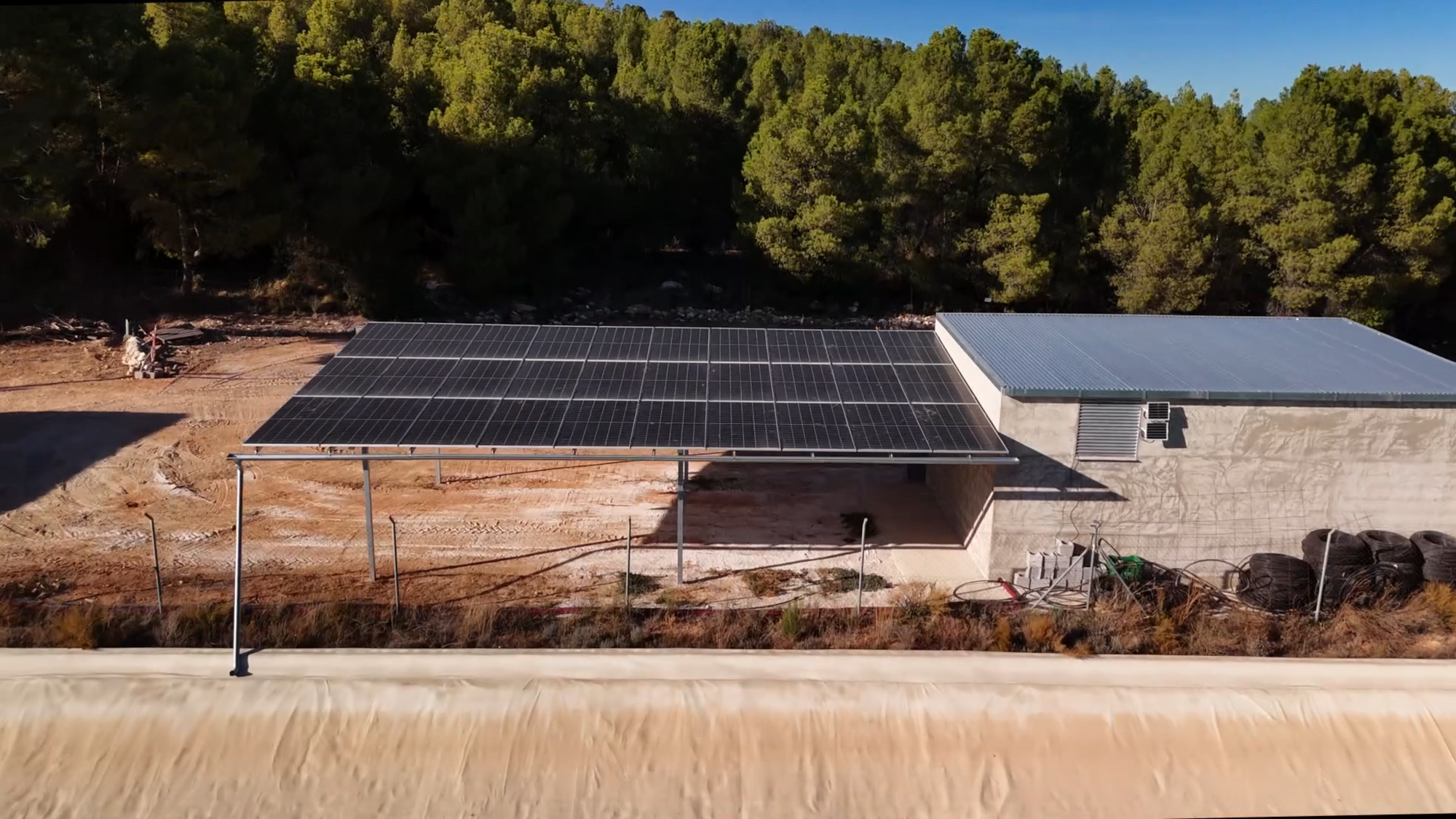
Photovoltaic pergolas can be successfully installed on top-floor flats and isolated homes, offering multiple benefits in terms of solar energy and design. To install these pergolas in such environments, some basic requirements must be met:
- A robust structure: the structure of the rooftop or isolated home must be strong enough to support the weight of the pergola and the solar panels.
- Proper orientation: the pergola must be oriented to maximise sunlight capture. South orientation is generally ideal in the northern hemisphere.
- Free space: enough free space is needed for the installation, allowing proper air circulation and avoiding shading from other buildings or trees.
- Cabling and connections: appropriate electrical connections must be planned to integrate the electricity generated by the panels into the home's grid.
Use as a vehicle pergola
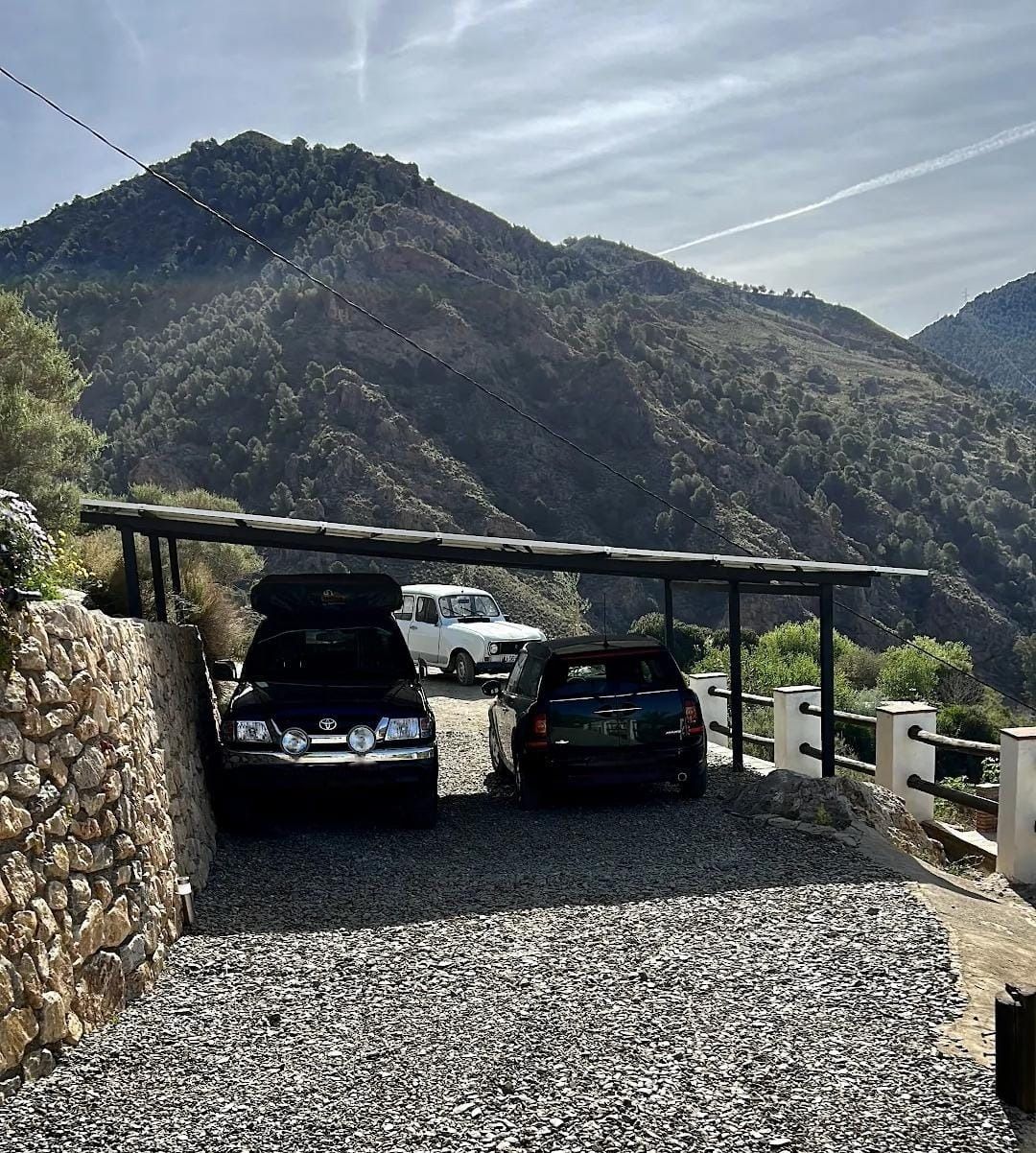
One of the most common uses for photovoltaic pergolas is as a carport or garage for vehicles. These pergolas not only protect cars from the weather, but they also generate clean and renewable energy that can be used to charge electric vehicles or meet other household energy needs.
Terraces and gardens
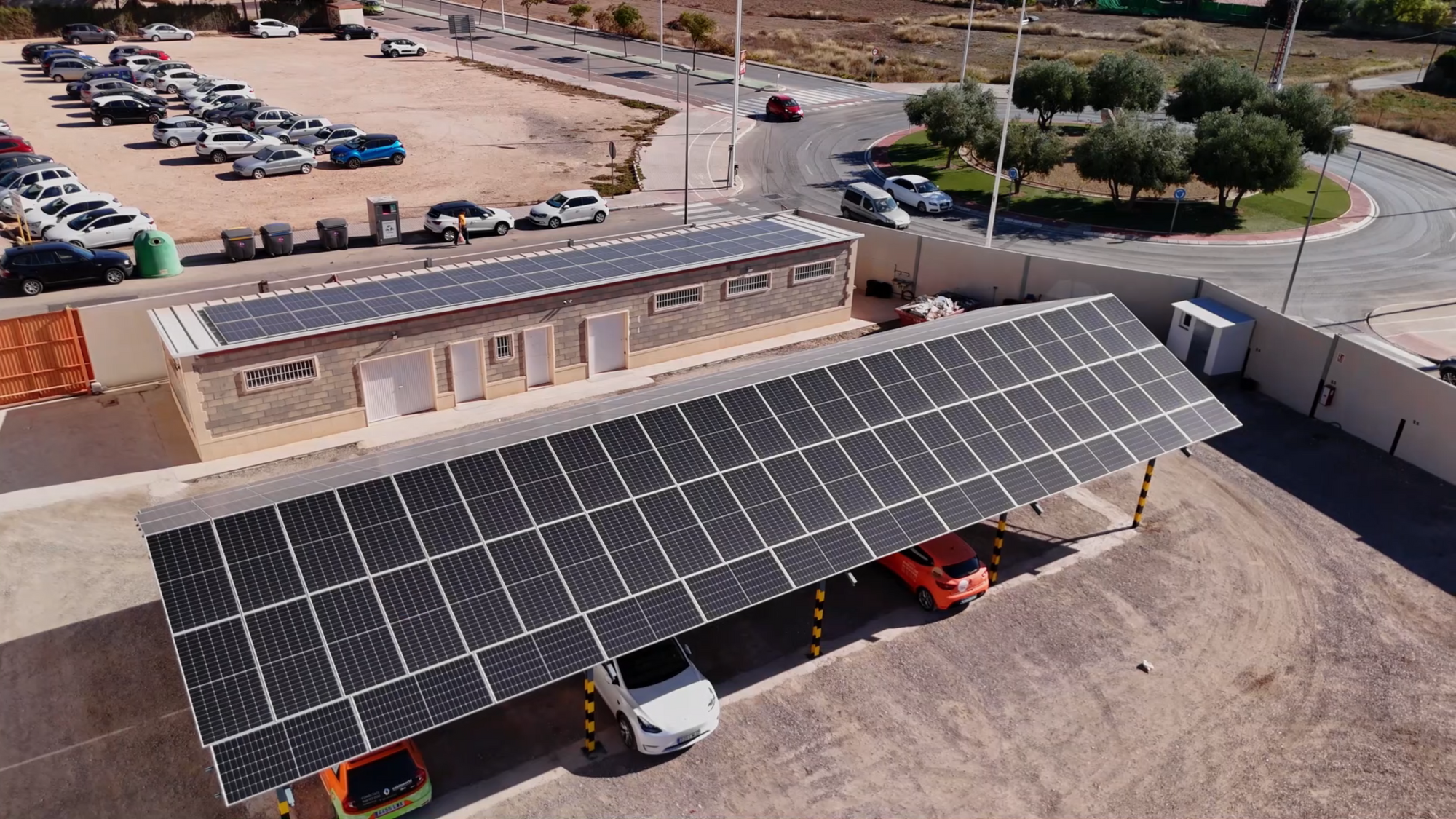
Photovoltaic pergolas are ideal for making the most of outdoor spaces such as terraces and gardens. They provide shade and a sustainable energy source that can be used to light the area, power water features or even small outdoor appliances.
In short, photovoltaic pergolas offer a versatile and efficient solution for many applications, from protecting vehicles to improving the aesthetics and functionality of rooftops, terraces and gardens. They are a smart and ecological investment for any outdoor space!
Success stories — discover our clients' stories
Sizing and power
Electricity consumption
Before sizing your photovoltaic installation, it is critical to know how much electricity you currently consume at home or in your business. To do that, you need to analyse your electricity bill and determine your average monthly consumption in kilowatt-hours (kWh). This figure lets you calculate how many solar panels you need to cover your energy demand and so determine the optimum capacity of your installation.
Location
The geographic location of your solar installation in Spain has a significant influence on its efficiency. In general, Spain enjoys high solar exposure, especially in the south and along the Mediterranean coast, where there are more hours of light per year. This means fewer panels are needed to generate the same amount of energy compared to regions with less sunlight. It is essential to consider the climate and latitude of your location when planning your installation.
Orientation and tilt
The orientation of the solar panels and the tilt angle are factors that affect how much energy they can generate. Ideally, panels should face south in the northern hemisphere and north in the southern hemisphere to maximise the amount of sunlight received. Additionally, the tilt angle should be adjusted to optimise solar exposure based on your latitude. The right angle improves panel efficiency and ensures maximum energy production throughout the year.
How many panels are needed depending on use?
The number of photovoltaic panels needed varies according to use and energy demand. Below is an approximate calculation for different applications:
For an electric vehicle
To charge an average electric vehicle, a significant amount of energy is needed. Let's assume the vehicle covers 100 km a day. Electric vehicles typically consume between 15 and 25 kWh per 100 kilometres travelled.
- Daily energy required: 20 kWh
- Daily production per panel: a 500 W photovoltaic panel can produce around 3 kWh per day in optimum conditions (assuming 6 peak hours of sun).
To calculate the number of panels needed:
Number of panels needed = energy consumed / energy produced per panel = 20 kWh/day / 3 kWh/day = 6.66
You would need 7 solar panels of 500 W to fully cover the energy needs of your electric vehicle.
For a medium-sized house
Let's consider a house that consumes 1,105 kWh a year for its energy needs:
- Annual energy required: 1,105 kWh
- Daily production per panel: 3 kWh (same assumption as before).
Estimated prices before confirmation visit
| Power | 3 kW | 5 kW | 7 kW | 9 kW |
|---|---|---|---|---|
| Estimated price before confirmation visit | €5,398 | €6,498 | €7,977 | €9,998 |
| Number of panels | 6 × JASOLAR 500 W | 10 × JASOLAR 500 W | 14 × JASOLAR 500 W | 18 × JASOLAR 500 W |
| Production warranty | 30 years | 30 years | 30 years | 30 years |
| Inverter | 3 kW hybrid single-phase | 5 kW hybrid single-phase | 6 kW hybrid single-phase | 6 kW hybrid single-phase |
| Smart monitoring | ✅ | ✅ | ✅ | ✅ |
| Installation and labour | ✅ | ✅ | ✅ | ✅ |
| Smart Meter | ✅ | ✅ | ✅ | ✅ |
| Structure, cabling, protections, electrical panels and anything that may come up | ✅ | ✅ | ✅ | ✅ |
| Subsidy processing | ✅ | ✅ | ✅ | ✅ |
| Electrical certificate | ✅ | ✅ | ✅ | ✅ |
| Technical descriptive memo | ✅ | ✅ | ✅ | ✅ |
| Legalisation | ✅ | ✅ | ✅ | ✅ |
| Commissioning | ✅ | ✅ | ✅ | ✅ |
| 24/7 support | ✅ | ✅ | ✅ | ✅ |
Other considerations that can affect the installation cost
Our pergolas are fully customised to ensure maximum performance from your photovoltaic system and your full satisfaction with the service provided. Below are some considerations that can influence the installation cost:
- Type of ground: the composition and stability of the ground where the pergola will be installed can affect the installation cost. A more stable, easier-to-work ground will reduce costs compared to difficult or unstable terrain.
- Height: the height at which the pergola is installed also influences the cost. Installing a pergola at ground level is simpler and cheaper than doing it on a 10th-floor rooftop.
- Panel types: photovoltaic panels come in various types, such as standard panels and bifacial panels. Bifacial panels, which capture light from both sides, can offer higher efficiency at a higher cost.
- Pergola finish: the finish of the pergola, whether painted or lacquered in a neutral colour, can impact the price. More elaborate or specialised finishes usually have an extra cost.
- Pergola material: the type of material used to build the pergola — wood, aluminium or steel — also determines the total installation cost.
To get the most accurate quote for your specific needs, you can request a free no-strings quote. You will receive an estimate in minutes that lets you plan your project efficiently and accurately.
I already have a pergola — can I use it to mount solar panels on top?
Yes, it is possible to use an existing pergola to install solar panels. However, several factors should be considered before pursuing this option:
- Age and condition of the pergola: if the pergola is several years old or in poor condition, it may not be suitable to support the weight of the solar panels.
- Orientation: the pergola must be properly oriented to maximise sunlight and panel efficiency.
- Electrical capacity: it is important to make sure the existing pergola's electrical installation can handle the connection of the solar panels.
In general, it is advisable to consult a professional before making any modifications to an existing structure to guarantee the safety and efficiency of the project. It is also important to ensure compliance with all local building regulations and codes before installing any solar panels on a pergola. In some cases, it can be more cost-effective to build a new pergola specifically designed to support a solar installation rather than modify an existing structure.
Legal aspects and subsidies
Income tax (IRPF) deduction
Residential, national:
- 40% or 60% deduction: with a maximum of €7,500 or €15,000 if a reduction of at least 30% in non-renewable primary energy consumption is certified, or if a minimum energy label of class B is achieved. To qualify for this deduction, an energy certificate is needed before and after the installation.
- 20% deduction: if the reduction of primary energy consumption is between 7% and 29%, the deduction would be 20% with a maximum of €5,000.
Valencian Community — regional:
- 40% deduction: if it is your primary residence, or 20% if it is a second home, up to a maximum deduction base of €8,800. This aid is compatible with the national 60% deduction.
Other regions — regional:
- 10% to 40% deduction: depending on whether it is a primary or second residence and on the aid assigned by each region.
IBI (council tax) discount
Each council has its own bylaw and you must check whether the council where the installation will take place offers a council tax discount. In each case, the council always requires the responsible declaration or a minor works licence to process this aid. We handle the documentation; the application itself is the client's responsibility.
Maintenance and useful life
In climates like Spain's, no special maintenance is needed for the solar panels. The panels self-clean on rainy days, and dust does not reduce production performance by more than 80%. This makes maintenance very easy and ensures efficient production over time with minimal effort from the user.
Warranties and estimated useful life of components
- Inverter: the inverter has a 10-year warranty.
- Panels: the photovoltaic panels carry a warranty of 80% of production after 30 years from installation.
In general, solar panels are very durable and capable of withstanding various weather conditions. Some components of your solar energy system will need to be replaced at different points, but your system should keep generating electricity for 30 years.
Beyond product and performance warranties, we also guarantee that your installation has been carried out in accordance with all applicable codes and regulations. All the equipment and materials we use are high quality and meet international standards.
How to request a personalised quote
You can fill out the contact form below or call us at 692 22 97 13. One of our agents will get back to you as soon as possible to understand the specific needs of your project and offer you a quick, tailored solution.
At A Todo Sol we offer fast, efficient installation times. Once the project details are agreed, your installation will be completed within a maximum of two weeks from the signing of the agreement. In most cases, our installations take only 1 day, but if anything unexpected comes up, a maximum of one extra day will be taken to complete them.