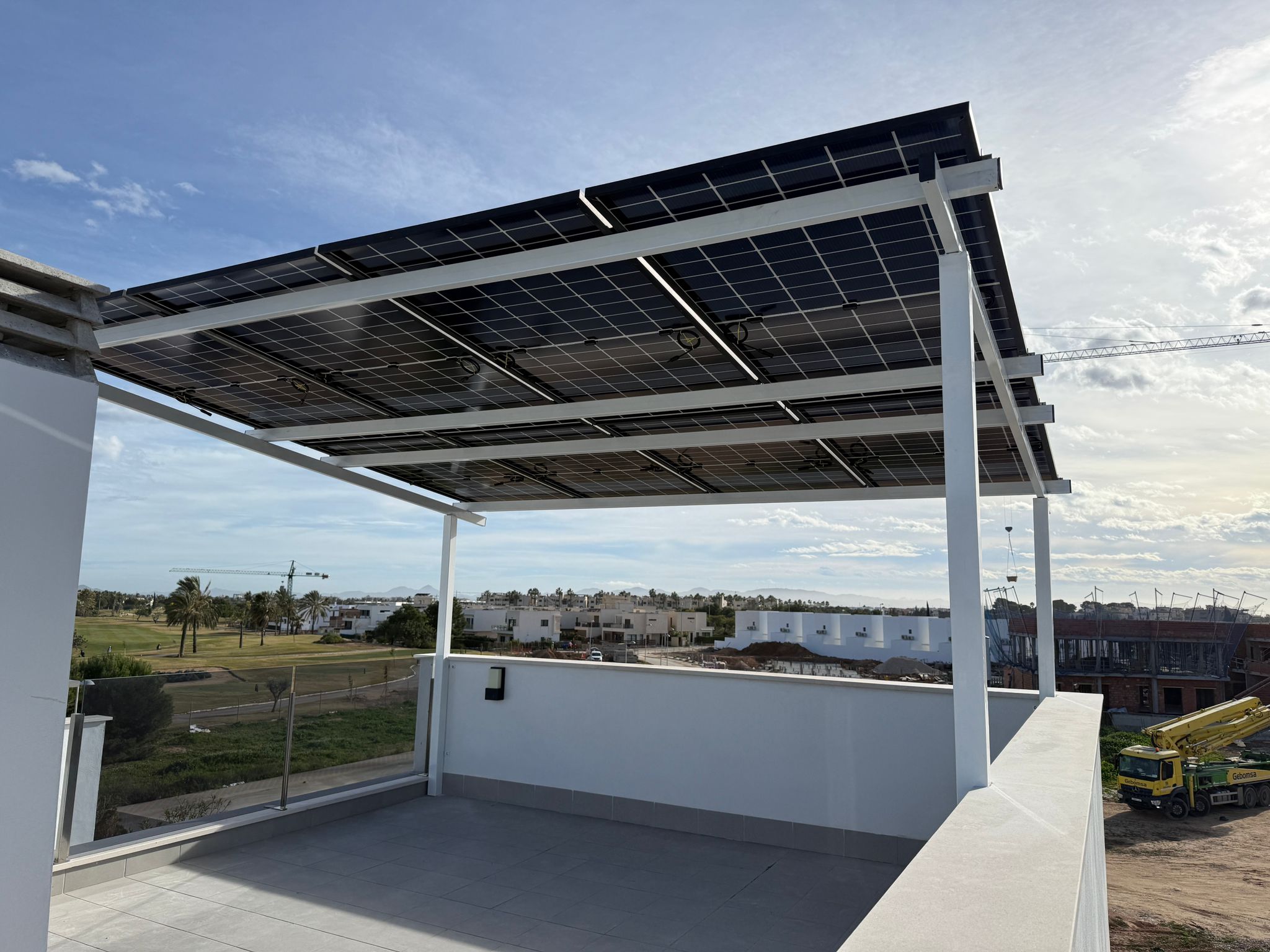
Owning a house at the beach, in the mountains or in a village is a privilege. But it also means fixed costs all year round: utilities, maintenance, taxes... and among them, the electricity bill usually raises a very specific question: is it worth installing solar energy if I only use the property at weekends or on holidays?
In this article we look in detail at how much you really save with solar panels at home, especially when use is intermittent, what factors influence the savings, and what solutions exist to optimise the investment even if the property is empty most of the year.
Does it make sense to install solar energy in an occasionally-used home?
At first glance, many people think it does not pay off. If consumption is low or concentrated in a few days a month, it seems logical to think the payback will be very slow. The reality, however, is more nuanced.
Profitability does not depend only on how many days you use the house, but on factors such as:
- The type of electricity contract.
- The contracted power.
- The standby consumption during the week.
- Whether surplus compensation is available.
- Roof orientation and size.
- The possibility of shared or virtual self-consumption.
Even if you only go at weekends, the property remains connected to the grid 365 days a year. Fridge, router, alarm, water heater or automatic irrigation systems keep consuming energy. That base load, added to weekend use, can make a solar installation more meaningful than you imagine.
How self-consumption works in a second home
When we talk about solar panels in a holiday home, the key is to understand what happens to the energy generated when you are not there.
On working days, if there is not enough consumption, the system will produce surplus energy. That energy can:
- Be injected back to the grid and earn an economic credit on your bill.
- Be stored in batteries if the system includes them.
- Reduce the base consumption of the home during the week.
In many cases the simplified surplus compensation mechanism allows the monthly bill to drop considerably even if the house is empty during the week.
The typical consumption profile of a weekend house
To assess real savings with solar panels you have to look at the actual consumption pattern.
In a typical second home you will find:
- Low consumption Monday to Friday (fridge, standby, alarms).
- High peaks Friday afternoon, Saturday and Sunday (air conditioning or heating, cooking, washing machine, lighting, TV, device charging…).
- Intensive use during holiday periods.
This pattern matches solar production very well, since solar concentrates in the central hours of the day, especially in spring and summer when these properties are used most.
In coastal areas or warm climates, the overlap between higher use and higher solar radiation noticeably improves profitability.
Is it economically profitable?
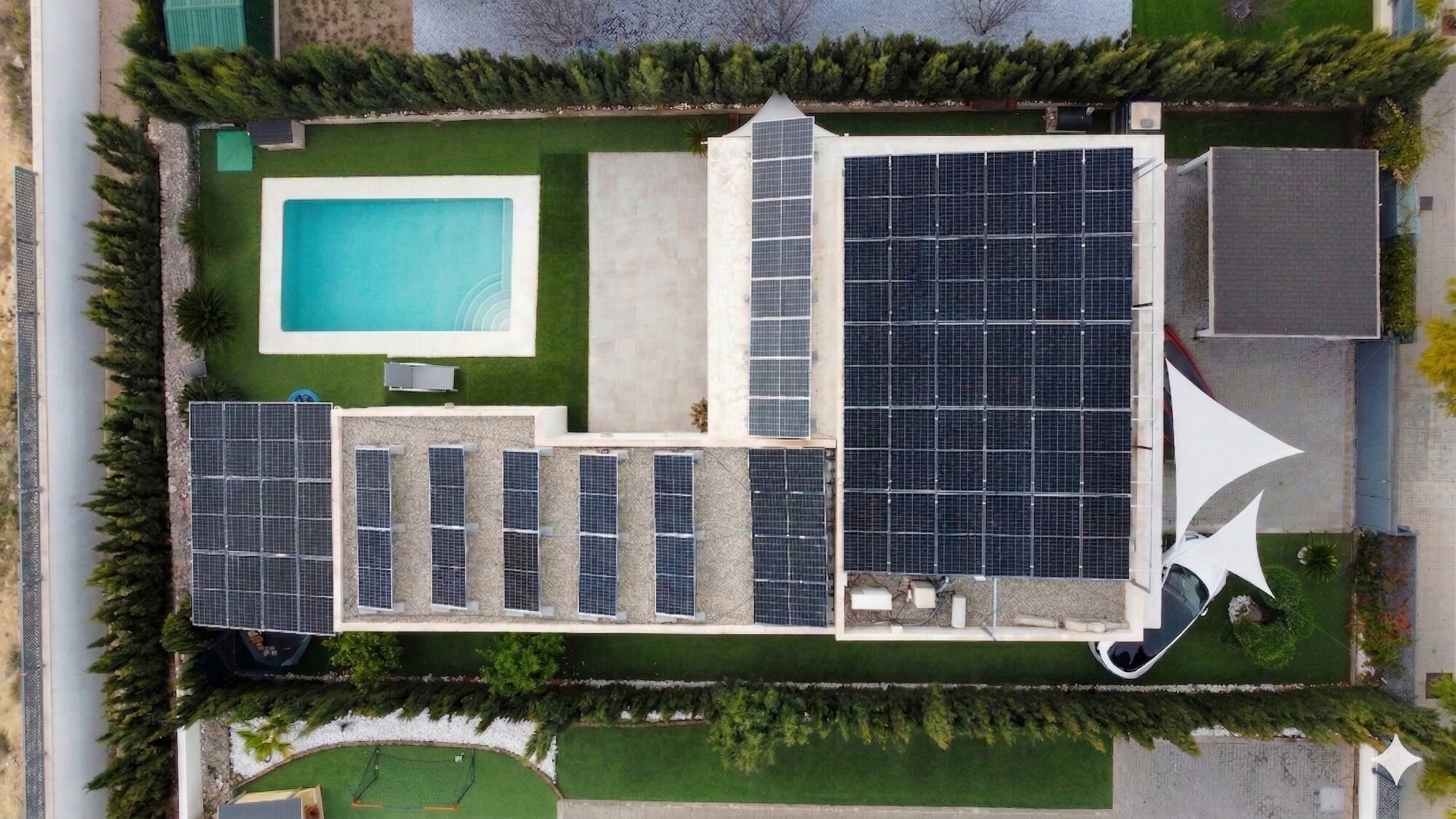
The short answer is: it depends, but in many cases yes.
The real savings with solar panels and the return on investment depend on:
1. The cost of the installation
Photovoltaic prices have fallen considerably in recent years. On top of that there are regional subsidies and tax deductions that can cut the upfront investment by up to 60%.
2. The contracted power
Many holiday homes have a contracted power higher than they actually need. Optimising the power level alongside the solar installation can produce a double saving.
3. Surplus compensation
If you choose the right tariff, the energy generated during the week can offset part of the weekend consumption.
4. The time horizon
Even with partial use, the property will be there for years. If your intention is to keep it long-term, the payback still happens, just over a slightly longer period than for a primary residence.
In general terms, the return on investment can sit between 6 and 10 years depending on system size and consumption, even in an intermittently-used home. With the 60% tax deduction, that period can shrink significantly.
What if I only go in summer?
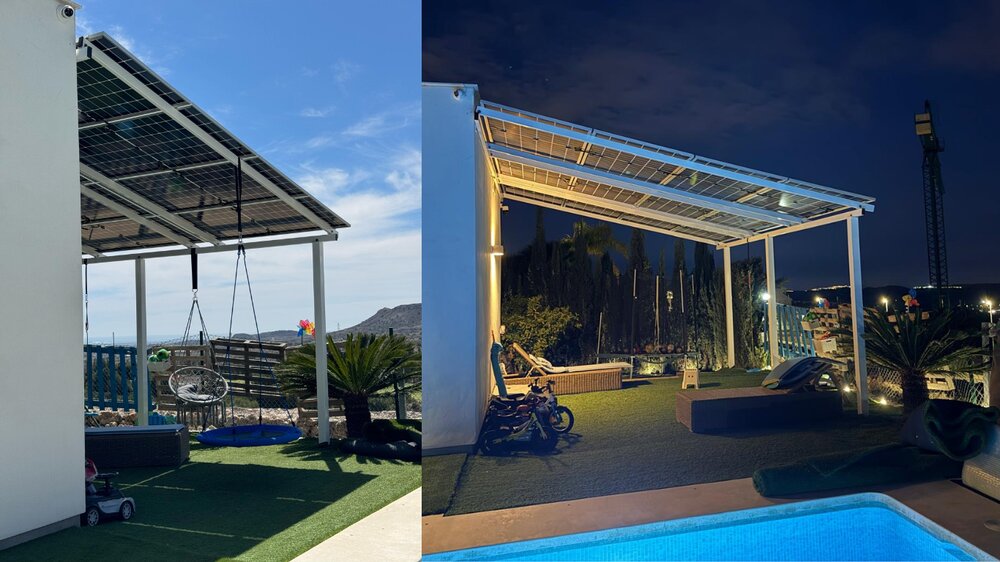
In that case, profitability can be even higher than you imagine.
Summer is precisely when solar panels produce most. And it is also when this type of property is used most, with air conditioning, swimming pool and appliances.
If the home is in a coastal area or one with high solar radiation, production will be high. The energy generated during the unused months can be financially compensated as long as the property keeps an active electricity contract.
On top of that, many people do not cancel their electricity supply during the winter, so the system keeps producing energy that reduces the annual bill.
Batteries — yes or no in a second home?
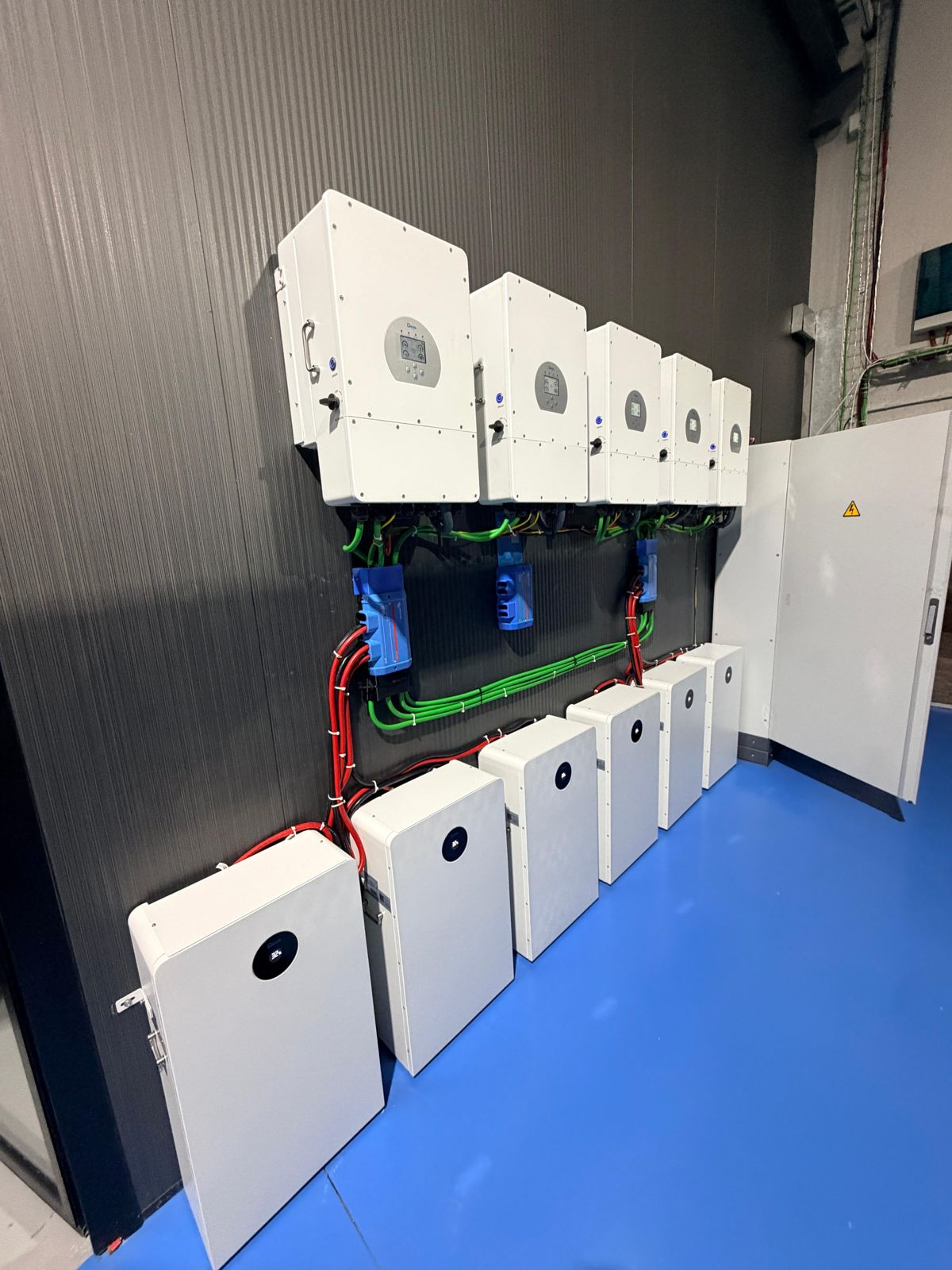
One of the most common doubts is whether it is worth adding batteries.
In a property used only at weekends:
- If consumption is heavily concentrated at night (for example, electric night-time heating), batteries can help.
- If most of the consumption is daytime (air conditioning, swimming pool, cooking), they may not be necessary.
In many cases, starting without batteries and considering them later is a smart strategy.
The analysis must be personalised. Not every second home needs the same solution.
Extra benefits beyond the savings
Saving with solar panels is not only economic. Installing solar energy in a home also brings:
- Property revaluation.
- Improved energy rating.
- More appeal if you decide to rent it out on holiday platforms.
- Independence from electricity price hikes.
- A sustainable image and environmental commitment.
In markets where holiday rentals are common, a property with self-consumption can be a differentiating factor.
How many panels do I need if I only go at weekends?
The point is not to fill the roof. In many cases, a system more closely matched to actual consumption is enough.
What we look at:
- Annual consumption in kWh.
- Contracted power.
- Available roof area.
- Roof orientation and tilt.
- Shading.
An over-sized installation can produce too much surplus that is not always 100% compensated. That is why the technical design is critical.
At A Todo Sol we run personalised studies to fit the system to each specific case and maximise performance.
Real cases: when it clearly pays off
There are profiles where solar panels in a second home are particularly attractive:
- Homes with a swimming pool.
- Houses with automatic irrigation systems.
- Properties rented out seasonally.
- Second homes used for occasional remote work.
- Houses with an electric water heater always on.
In these scenarios, the base consumption is higher than it looks and the savings with solar panels are very noticeable.
Common mistakes when analysing profitability
Many people calculate savings purely on the days they are physically at the property. That is incomplete.
Common mistakes:
- Not factoring in permanent consumption.
- Not factoring in surplus compensation.
- Not considering the available subsidies.
- Comparing quotes without a detailed technical study.
- Not optimising the contracted power.
A professional analysis can completely change the perception of the investment and the real savings.
So, is installing solar panels at home a good decision?
The answer is not universal, but in many cases it is profitable if it is designed correctly.
What matters is:
- Right-sizing the installed power.
- Choosing the right tariff.
- Tapping into available subsidies.
- Analysing the real annual usage.
- Studying whether a battery makes sense.
The key is not how much time you spend in the house, but how the consumption behaves throughout the year.
If the home has recurring use, an active electricity contract and continuous base consumption, solar energy can substantially reduce the annual bill.
How we can help you at A Todo Sol
Every property is different. That is why, before giving a standard quote, we run a personalised technical and financial study.
We analyse your real consumption, simulate the estimated solar production and calculate the approximate payback period. That way you can take an informed decision, with no guesswork.
Our goal is not to sell an unnecessary installation, but to offer an efficient, right-sized and long-term profitable solution.
If you are considering installing solar panels at home and want to know whether it pays off in your specific case, we can help you clear up doubts with a no-strings study.
Installing solar energy in an intermittently-used home is not an automatic decision and should not be based on intuition. However, in many scenarios it turns out to be more profitable than it looks at first sight.
Solar production does not understand weekends; it works every day of the year. And when combined with surplus compensation and an optimised design, it can turn a second home into a more energy-efficient and economically more sustainable space.
If you want concrete numbers applied to your home, the next step is to analyse your consumption and let the data speak.